
HISTORY OF THE DORSET MILITIA FROM ITS ORIGINS UP TO THE END OF THE GEORGIAN PERIOD
Ian Gosling,
Chair of Dorchester Civic Society
SAXON TIMES TO THE REFORMATION.
The obligation to bear arms when required by the authorities under whom you lived can be traced back at least to Anglo-Saxon times and it continued in the medieval period. In medieval England the King could call for assistance from his Barons, and they in turn required the knights who lived on their estates to join them with their horses, together with the freemen under the latter’s control who provided the infantry and archers. This pyramid of obligations obviated the need for the King to maintain a big standing army and spread the cost of raising military support amongst his subjects.
THE TUDORS.
In 1539 Henry VIII’s relationship with France deteriorated and he feared a French invasion. He accordingly called a ‘Grand Muster’ of all the counties in England to assess the number of armed men whom he could call upon to defend his realm in each hundred, borough and liberty. The quota available from Dorsetshire amounted to 5,245 men. The threat did not materialise into a call-up of troops.
The basis on which the sovereign could raise a force of armed men was then reformed by two Acts of Parliament passed in 1557. These measures provided for each county to raise a ‘militia’ under the control of the Lord Lieutenant, the Sovereign’s representative, assisted by Deputy Lieutenants and the Justices of the Peace. After 1572 the practice grew of selecting only certain members of the potential force to be equipped and trained on a regular basis and these were known as the ‘trained bands’.
In Elizabeth I’s reign the alliance entered into with Holland against Spain led to war with the latter and a renewed threat of invasion. After three years the threat materialised and preparations to defend the maritime counties began, culminating in a mobilisation of the trained bands on 23rd July when news was received of the massing of the Spanish Armada in the ports of Spain (see my post of May 2024). Part of the Dorset contingent was sent to Tilbury where they were joined by regiments from across the nation and reviewed by the Sovereign, whilst the units remaining in the county were despatched to their defensive positions along the coast and shadowed the progress of the Spanish galleons westwards along the Channel coast. After the defeat of the Armada by British warships the county contingents were sent home.
The trained bands remained available and there were several alerts later in Elizabeth’s reign, principally in 1596.
THE STUARTS AND THE CIVIL WAR.
The importance of the institution of trained bands declined under James I, but his son Charles I wished to revive the force and to bring it under central Royal control as a national militia. The militia were mobilised once again to fight Scotland when in 1640 Charles attempted to oblige the Scots to respect the liturgical practices of the Anglican High Church. A contingent from Dorset was despatched with other units to Newcastle but the force heading north was ill disciplined and mutinied whilst in Faringdon in Berkshire and thereafter was depleted by numerous desertions. What was left of the army was defeated at Newburn near Newcastle, forcing the King to treat for peace with the Scots.
Not surprisingly the control of the militia was one of the many issues in dispute between King and Parliament that led to the Civil War which commenced in August 1642. Both sides attempted to rally the county militia to their cause shortly before the conflict. Without consulting Parliament, the king issued Commissions of Array to prominent county families to raise volunteers, whilst Parliament unconstitutionally issued a Militia Ordonnance calling up the militia to support their cause, without first obtaining the Royal assent.
The outcome not surprisingly was that the county militia broke up into factions, for example when Parliamentarian troops besieged Sherborne Castle in September 1640 Dorset trained bandsmen joined both sides, with Colonel Hugh Roger’s regiment joining the Royalist garrison and Sir Thomas Trenchard’s regiment and the Dorchester Trained Band joining the Parliamentarian besiegers. The siege was lifted, the Royalist forces moved on to Devon and Cornwall and the Dorset militia factions are believed to have all returned home.
When in 1643 a Royalist force under the Earl of Carnarvon took Dorchester, which had declared in favour of Parliament at the beginning of the conflict, there was no opposition from the Dorchester Trained Band and during the rest of the war the town was not garrisoned by either side in the conflict.
After the defeat of the King’s forces Parliament was quick to re-establish its control of the county militia and passed Militia Acts in 1648 and 1650 to replace the old command structure with county commissioners appointed by Parliament, or under delegation, by the Council of State. When Parliament, and then the Protectorate, subsequently called up the militia to serve alongside its New Model Army, its members were paid, thus negating the risk of desertion!
THE RESTORATION OF THE STUARTS AND THE MONMOUTH REBELLION.
After Charles II regained the throne on behalf of the Stuarts in 1660 the organisation of the militia was reformed once again, principally by retransferring the power of control from Parliament to the Lord Lieutenants, the representatives of the King in each county. The militia were called out on numerous occasions during his reign, in particular to repress non-conformist religious meetings called contrary to the Conventicle Act of 1664.
His brother James II who succeeded to the Throne in 1685 encountered opposition in the country because he was believed to be planning to reintroduce Catholicism.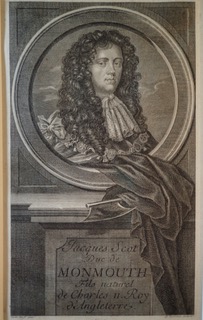
The Duke of Monmouth (Photo 1 of an 18th c print) crystallised the opposition by landing in Lyme Regis in 1685 in a bid to depose the Monarch. He hoped to garner support from what was believed to be a strongly Protestant local population. The King responded by calling up the militia to support his small professional army.
In Dorset the sovereign was represented by the Lord Lieutenant John Digby, 3rd Earl of Bristol and the Dorset County Militia (composed of six regiments, five of foot and one mounted) was under the command of the Deputy Lord Lieutenant Colonel Thomas Strangeways. Dorchester furnished the mounted regiment together with an infantry one.
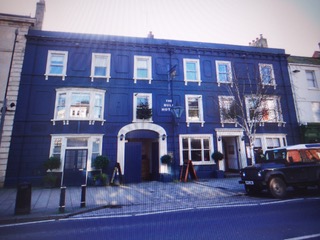 A skirmish took place in Bridport, principally around the Bull Inn (Photo 2), when a rebel force attacked the Dorset Militia under Colonel Strangeways and was driven off after suffering seven fatalities, compared to the three suffered by the Royalist force, including the Colonel’s brother.
Monmouth’s forces then headed northwards into Somerset and approached Bristol. His progress was blocked once more, and he fell back to the village of Norton St Philip where the Royalist army failed to dislodge him on 27th June 1685.
At that stage the Dorset Militia were exhausted by the constant marching needed to keep up with the rebels and were sent home to recover and defend their County. They were therefore not present when Monmouth attacked the Royalist army at Sedgemoor, near Bridgwater, on the night of 5-6th July 1685. His force was routed and he fled, only to be arrested two days later in Ringwood in Hampshire. He was taken to London and executed at the Tower of London on 15th July.
THE GLORIOUS REVOLUTION OF 1688 TO THE REFORM OF THE INSTITUTION IN 1757.
When William of Orange landed in Torbay on 5th November 1688 the Dorset County Militia had not been mustered for training for some two years and was not embodied at the time of the landing since James had built up the size of his regular army and doubted the loyalty of volunteers. In the event, the future William III’s progress to London was so rapid that there was not sufficient time for James to call up the Militia, William entered the capital on 18th December and James left for France five days later.
William III revived the force and when it was mustered once more in 1697 Dorset’s contingent was made up of twenty three companies of foot and two troops of horse.
THE WARS AGAINST THE FRENCH UNDER GEORGE II AND GEORGE III – EVOLUTION OF THE MILITIA.
A year after the start of the Seven Years’ War (1756-1763) the structure of the county militia was profoundly reformed by a series of Militia Acts. Henceforth, men selected by ballot in each parish were conscripted to serve for three years, although those selected could pay for substitutes to serve on their behalf. Officers were commissioned by the Lord Lieutenants but were required to meet a minimum property qualification. Adjutants and drill sergeants were coopted from the regular army to train the troopers.
One Regiment was formed for Dorsetshire, made up of 640 men and George Pitt (later to become Lord Rivers) was commissioned as its Colonel. It was embodied for service in Dorchester on 21st June 1759. After the signing of the Treaty of Paris in February 1763 the Regiment was stood down. However, it was kept in existence for the following fifteen years and occasionally mustered for training, for example in July 1767 when the Dorset Regiment was reviewed in Dorchester by Lord Shaftesbury.
Three years into the American War of Independence (1775-1783) George III’s ministers feared an invasion from France and Spain, who supported the insurgents in North America, since the majority of Britain’s regular regiments were serving abroad. The County Militia were therefore embodied once more, and the Dorset Regiment was called up for the first time in Spring 1768 and regularly trained in summer camps set up for the purpose until it was disembodied in 1783. From then onwards the parish ballots to select men for the Militia continued in operation up to 1792 but for budgetary reasons only two thirds of those called up were selected for annual training. Copies of the registers drawn up in Dorchester to record the results of the ballots can be viewed on the Fordington OPC website.
THE FRENCH WARS TO THE END OF THE GEORGIAN PERIOD – PROFESSIONALISATION OF THE MILITIA.
Ten year later, on 1st February 1793, France declared war on Britain three years after the start of its revolution. The Dorset Militia had been called up two months previously and shortly after war began its ten companies moved to quarters in Portsmouth.
The increased sophistication and globalisation of warfare at the end of the 18th century led to the county militias becoming full time professional soldiers, but whose role was limited to serving in the British government by manning coastal defences and garrisons, securing internal security and guarding prisoners. Their forces were supplemented by volunteers and mounted yeomanry. The mounted yeomanry were initially called the ‘Dorsetshire Regiment of Volunteer Yeomanry Cavalry’, and from 1796 as the ‘Dorsetshire Rangers’, and they were first raised by George Damer, Viscount Milton, the son of the Earl of Dorchester (Photo 3 of a portrait by Thomas Beach dated 1794, reproduced at the time in print form).
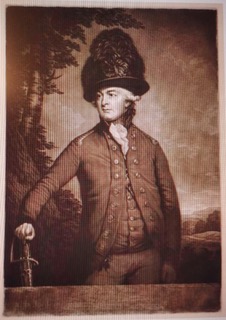
One year into the conflict the Dorset Regiment was increased to 840 men by voluntary recruitment, and it was initially based in Fordington.
In 1796 a supplementary militia was created nationwide which could be incorporated into the fulltime professional militia, the men being selected by conscription and trained in their spare time for twenty days a year.
In 1798 a rebellion broke out in Ireland and France set an expeditionary force to County Mayo on the west coast of Ireland to support the rebels. The Dorset and Devon militias were sent to reinforce the regular army, but they only arrived after the defeat of the French force in County Longford. They remained in Ireland however for just over a year and participated in ‘mopping up’ operations. After its return to England the force was stationed in garrison towns and also used to guard French prisoners. After hostilities were interrupted by the Treaty of Amiens in 1802 the Militia was stood down and the Dorset Militia was disembodied in April of that year.
When hostilities resumed a year later the Dorset Militia was recalled and embodied in Dorchester on 28th March 1803. It was moved along the south coast as required and returned to Dorset only after Nelson’s victory at Trafalgar on 21st October 1805. It then remained mainly in the southwest until it volunteered to be posted to Ireland once more from 1813 to 1814. War ended in late 1814 and the Regiment returned to Dorset and was disembodied in Dorchester in April 1815.
It was not recalled during the short period between the resumption of hostilities after Napoleon returned to France from Elba in March 1815 to his defeat at Waterloo in June of that year. From the definitive end of the war with France parish ballots continued to be held to select men for service with the Militia but the Dorset Regiment was only assembled for training on four occasions between that year and the accession of Queen Victoria in 1834.
They were only recalled for active duty in the 1830s when they were required to control the spread of the Swing Riots in the countryside. In 1831 the Sherborne contingent of the Dorsetshire Rangers were used to suppress the agricultural labourer’s riots that broke out in that town and elements of the Dorsetshire Militia were used to suppress the serious riots which broke out in Bristol in October of that year.
THE CULTURAL AND SOCIAL IMPACT OF THE MILITIA AND THE VOLUNTEERS.
At the beginning of the conflict with France men serving with the Royal Navy were extremely popular whilst those serving with the army were disliked and indeed feared, perhaps because troops had traditionally been billeted in the houses in the towns and villages through which they passed. However, the increased role and visibility of the yeomanry changed the public’s perception as they were faced with the threat of invasion by Napoleon (Photo 4 of a Staffordshire jug illustrating the threat – Dorset County Museum). 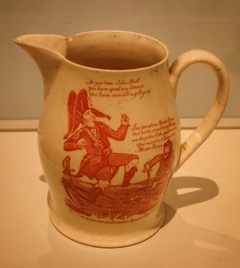 This was particularly so along the south coast where the leisured classes continued to flock to the new holiday bathing resorts, following the example of George III who spent his summer months in Weymouth together with the court.
Young women of all classes were attracted by the smart red jackets of the officers and men of the Militia (Photo 5 of the jacket of a Major in the Devon Militia c. 1789 – DCM). 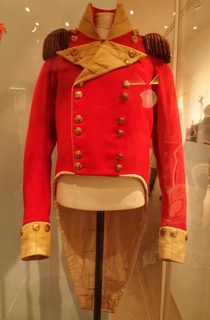 The novels of Jane Austen describe many such encounters, in particular during the balls held to welcome the officers visiting such resorts whilst they and their men were present on manoeuvres.
THE SURVIVING EVIDENCE OF THE DORSET MILITIA.
Given the difficulty of billeting troops on the population, the government began a programme of building barracks in county and coastal towns in 1792. In Dorchester the Riding School and the Infirmary are the only parts of the barracks built for the Dorset Volunteer Rangers which can easily be viewed by the public. However, the central block of the Georgian barracks, originally the officers’ quarters and mess and now married quarters, and the east wing, now a drill hall, together with the former cookhouses and barns, also survive within the present military compound.
These Georgian barracks predate the barracks which were built in Victorian times further to the west, around Barrack Square, and which are dominated by the tower which is now the Keep Museum.
The former Riding School (Photo 6) is situated on the left-hand side at the top of the road running down into the Marabout Industrial Estate and is a Grade II Listed building. Built in 1799 it housed an indoor ‘manege’, or arena, for the training of cavalry men and their mounts (an exceptional early example dating from the 16th century of such a building designed for purely civil use is situated next to Wolfeton House just outside the town).
The Riding School is rectangular with the front façade in red brick and the back of stone rubble and completed by a slate roof. Both facades have five arched recesses containing large round headed semi-circular windows designed to give maximum light to the arena. The vaulted basement served as the ammunition store. The building has been divided in two for commercial use and is currently occupied by a cleaning contractor and a carpet warehouse. The basement also survives.
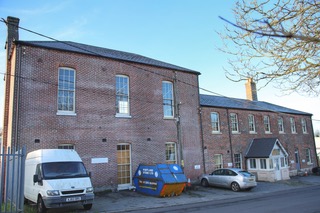 Lower down the road, also on the left, is the former Barracks’ Hospital (Photo 7), the main part of which was also built in 1799 and a Grade II listed building. It is two storeys high and built of red brick with a hipped slate roof. The interior is generously lit by two ranges of sash windows, and the porch is early I9th century.
Recent Comments