
Bu Ian Gosling, DCS Chair
Beer and ale have been brewed in Dorchester since at least the 14th century, evidenced by a tax on ale levied in Fordington in 1340. The reasons were that Dorchester possesses hard water rich in trace elements produced by natural filtration through the chalk downland which is essential to produce good quality ale and beer, together with vast quantities of excellent malting barley. The latter was even exported from the ports of Weymouth and Poole.
It is likely that before the Reformation the friars brewed both small beer (beer with a low alcoholic content not exceeding 2% proof) for day to day drinking and strong beer for Feast Days in their Friary situated at the foot of the town alongside the Frome. Small beer was also drunk by virtually all men, women and children in the working population since pump and well water could be of dubious quality and because the contents were highly nutritional.
In the countryside farmers and well to do families brewed their own beer, both small ale and stronger ale for the consumption of the men of the family in the evening. The brewing was normally carried out or supervised by the mistress of the house.
Thomas Cox in his History of Dorsetshire published at the beginning of the 18th century recorded that “Since by the French Wars [ (i.e. the War of the Spanish Succession fought between 1701 and 1714] the coming of French wines is prohibited, the people here [in Dorchester] have learnt to brew the finest malt liquors in the Kingdom, so delicately clean and well tasted that the best judges not only prefer it to the ales most in vogue in Hull, Derby, Burton etc….but look upon it to be little inferior to common wine.”
By the 18th century Dorchester beer and ale had become one of the most important by-products of agriculture produced in the town. They were transported to London and gained a nation-wide reputation A note inscribed by Emanuel Bowen on his map of Dorset of 1760 states that Dorchester “is famous for brewing the best and finest beer in England whereof great quantities have been of late years been exported and consigned to London”. In 1774 John Hutchins in his Survey of the County confirmed that “On the breaking out of the wars with France and the prohibition of French wines, malting and brewing was carried here to great perfection and they sent great quantities of excellent beer to London and to foreign part” and he concluded that it was “incomparable”.
The Dorchester Municipal Brewhouse was set up in 1622, on the site at 50 South Street now occupied by National Westminster Bank, by the puritan administration which, despite frowning at drinking and merry making in general, used the profits generated out of this “sinful conduct” to pay alms to the deserving poor, finance the town’s hospital, or Poor House, and the clothing and education of the children (mainly illegitimate) housed in it. The profits even financed repairs to the roads and infrastructure of the town. During the Civil War the brewery was wrecked by thirsty Royalist soldiers and then repaired. Its activity had ceased by 1706.
The malting of barley for brewing was carried out in the 18th century at the Old Malthouse on the corner of Fordington High Street (Photo 1), which has recently been converted into housing.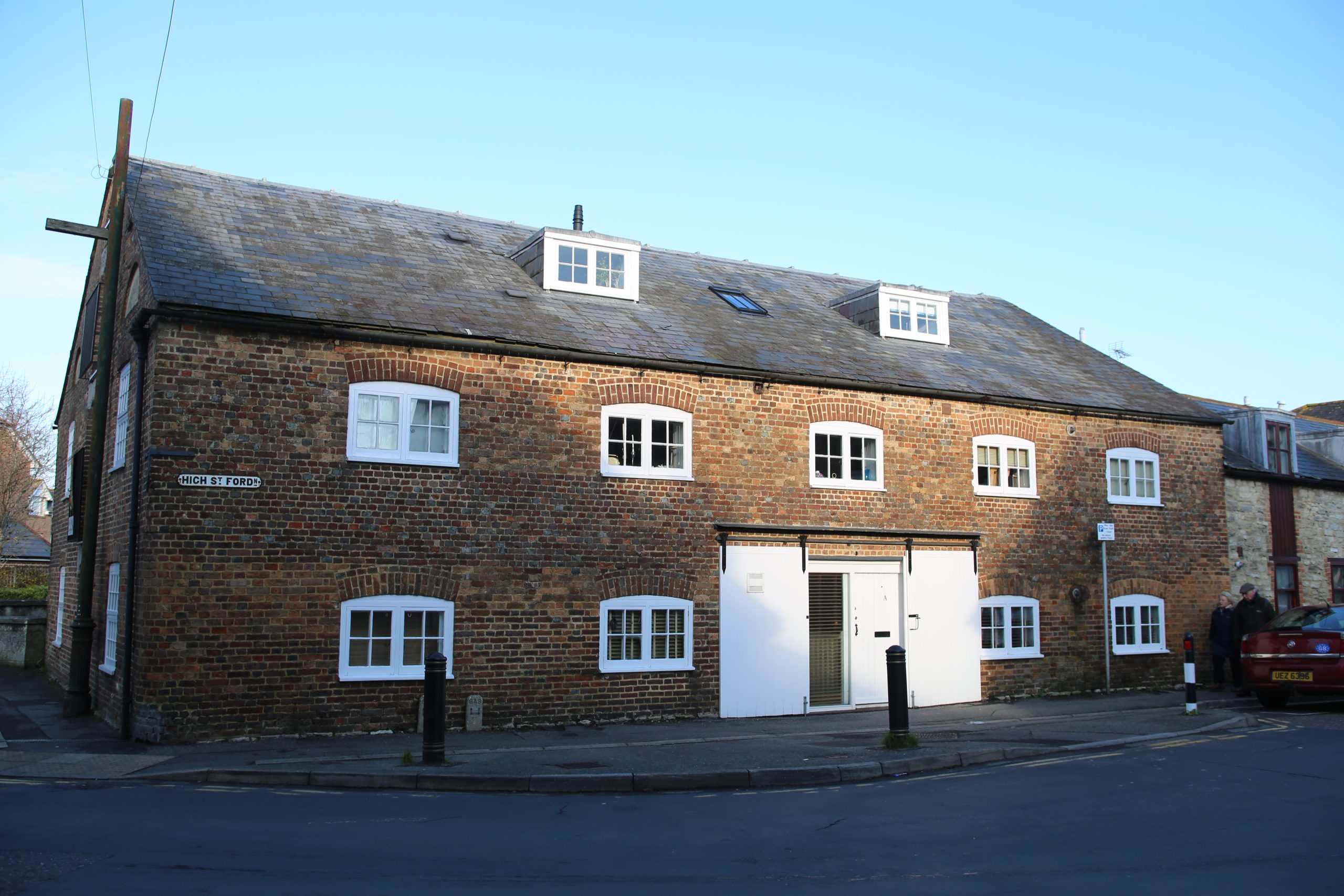
There were numerous other malthouses scattered throughout the town which serviced the town’s breweries but only five remained by the time that the first Ordnance Survey map of the town was published in 1887.
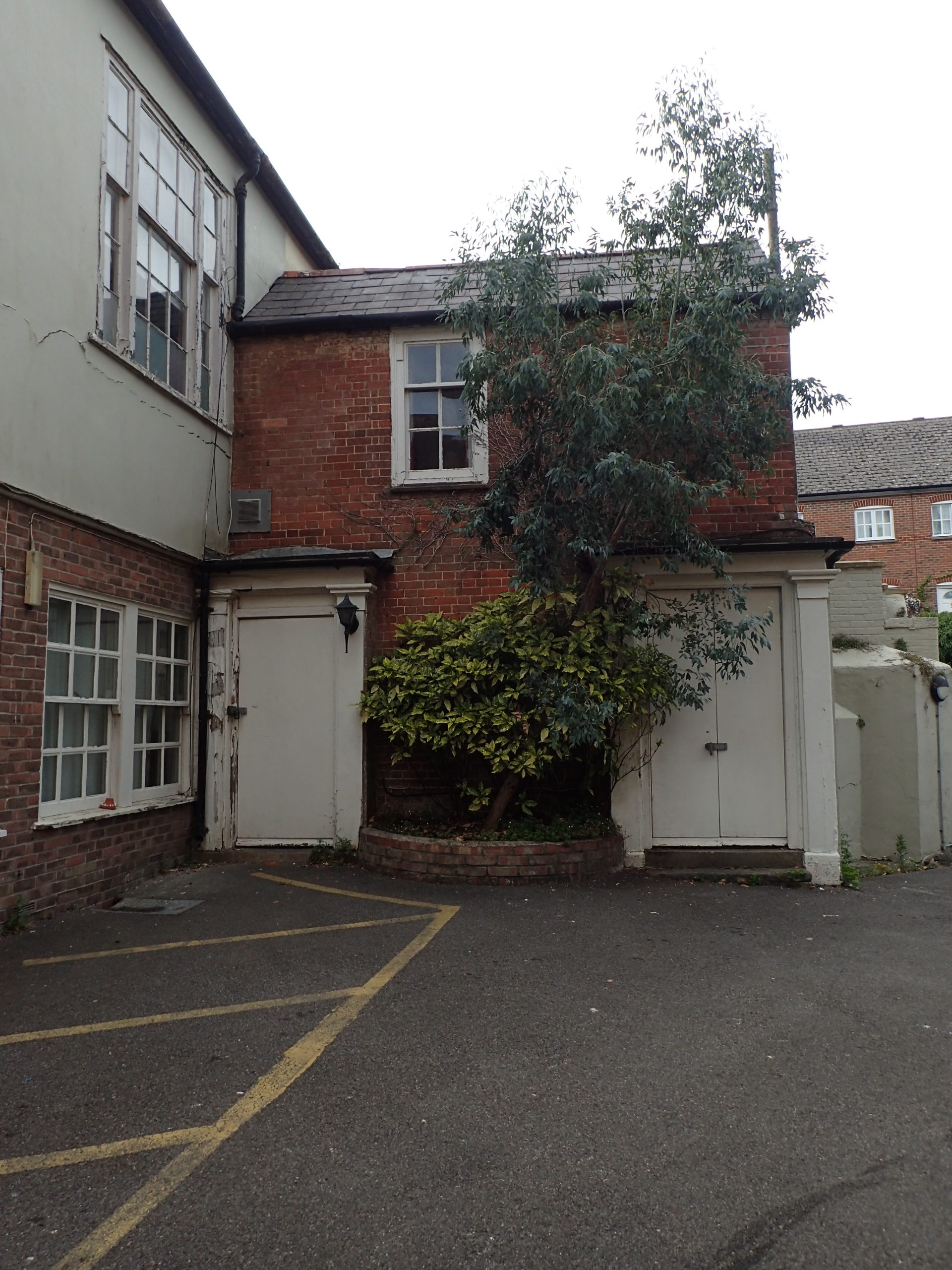
Many of the town’s inns and public houses also brewed their own beverage, for example, the King’s Arms coaching inn brewed its beer in a separate building at the back of its yard (Photo 2 of what I believe might have been the brew house).
Admiral Nelson stayed at the Kings Arms when travelling between London and Plymouth and is said to have appreciated Dorchester beer. Apparently, this determined him to ask Thomas Masterman Hardy, who was born and owned a house in Portesham and served as the captain of his flagship HMS Victory, to include Dorset beer amongst the victuals taken on board the fleet before Trafalgar. At the time a popular song warned the French of the fate that awaited them should they attempt to invade our island:
“In Devon they’ll dread Plymouth fort
Find boxers in Somersetshire.
And in Dorset they’d meet pretty sport,
From the lads who drink Dorchester beer.”
The most important brewery in town in the mid-18th century is believed to have been situated behind the former Phoenix Inn, originally called “The Phoenix in the Crown”, at No 15-16 High East Street (Photo 3).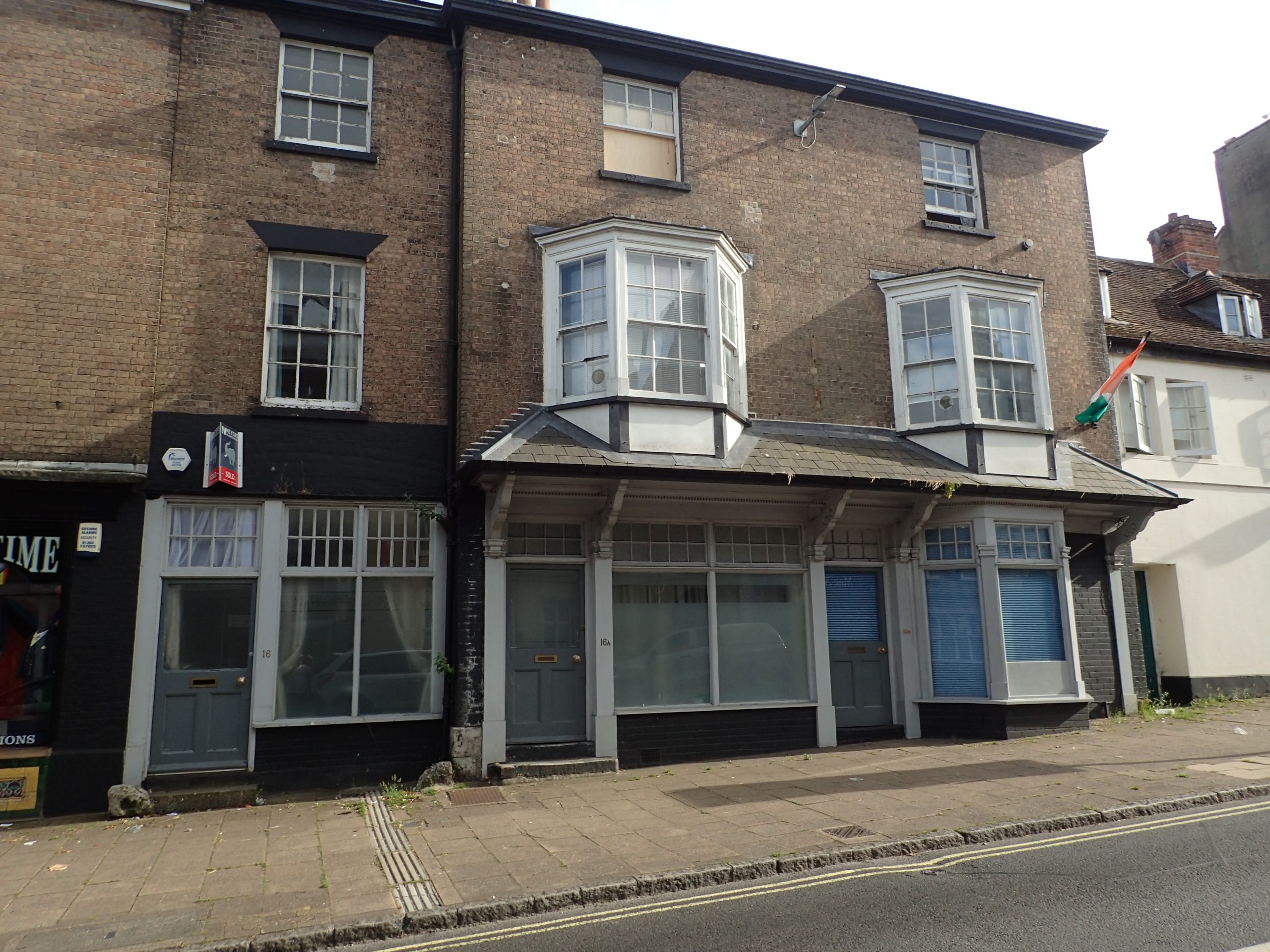
The entrance archway to the brewhouse and the malthouse was situated between the two “spur stones” which protected the arch from damage inflicted by wagon wheels.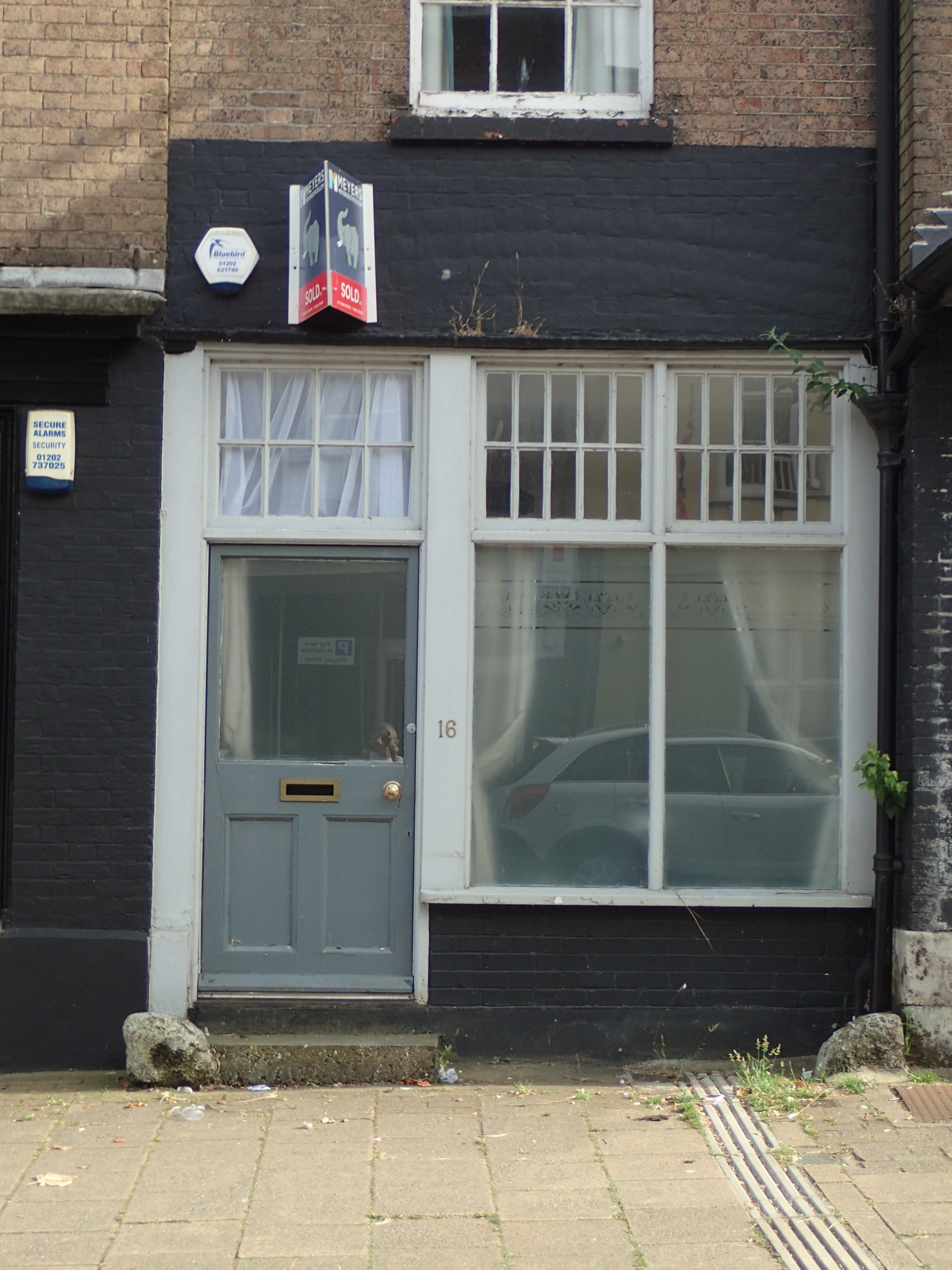
The arch has disappeared, replaced by a small building, but the spur stones remain on the left-hand side of the façade (Photo 4) whilst a 19th century public house front remains on the right-hand side. The pub closed in 1974
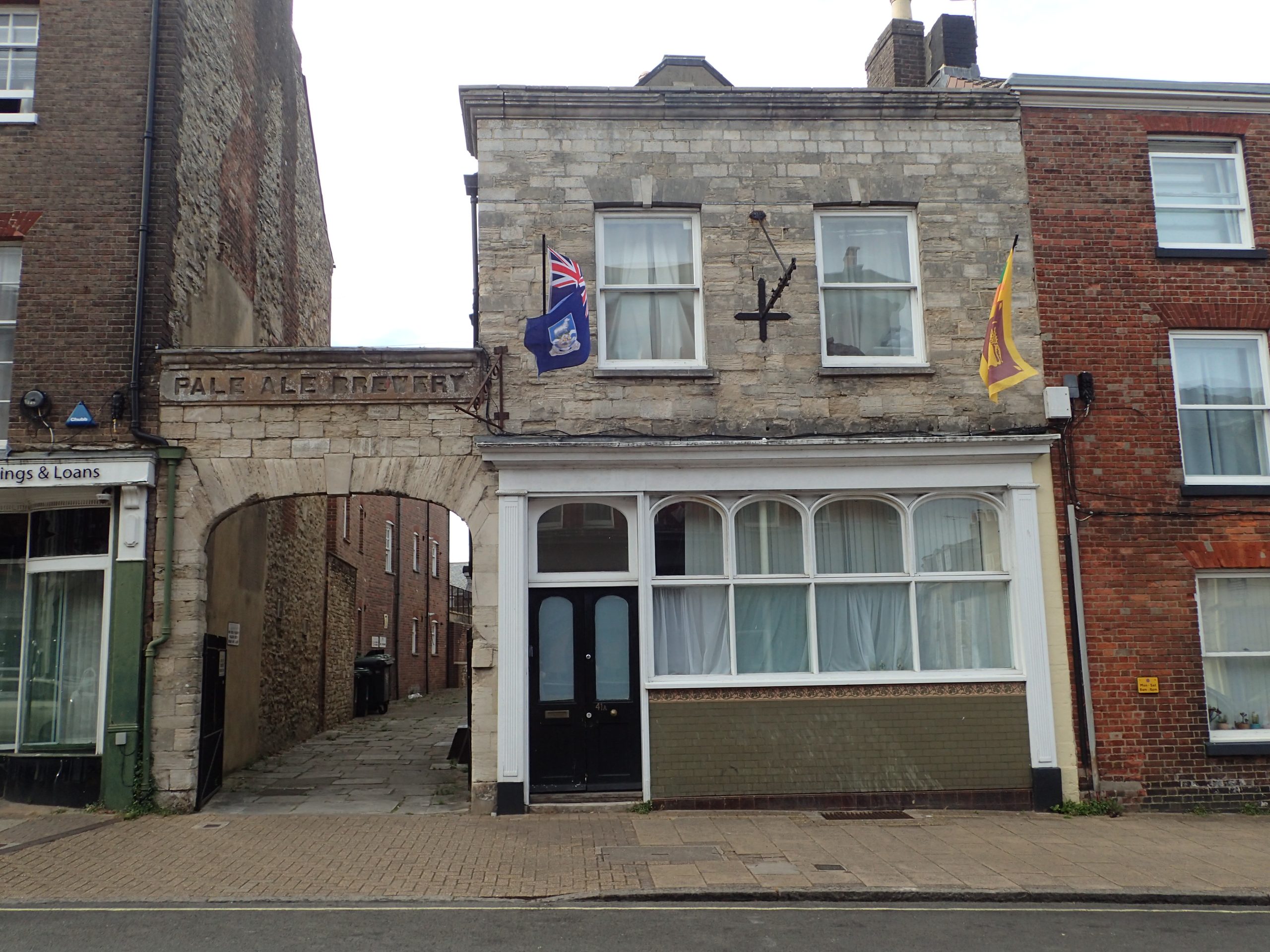 Opposite, the Pale Ale Brewery, situated behind the surviving archway (Photo 5), supplied ale to the Three Mariners public house on the right of the arch at No 41 High East Street. The Three Mariners is said to have been run for some time by John Standish, and it features in Thomas Hardy’s novel the Mayor of Casterbridge. The public house façade which remains to the right of the arch is that of the late 19th building which replaced the original structure of the 18th century. Behind the arch the former brewhouse survives, dating from the late 18th century (Photo 6).
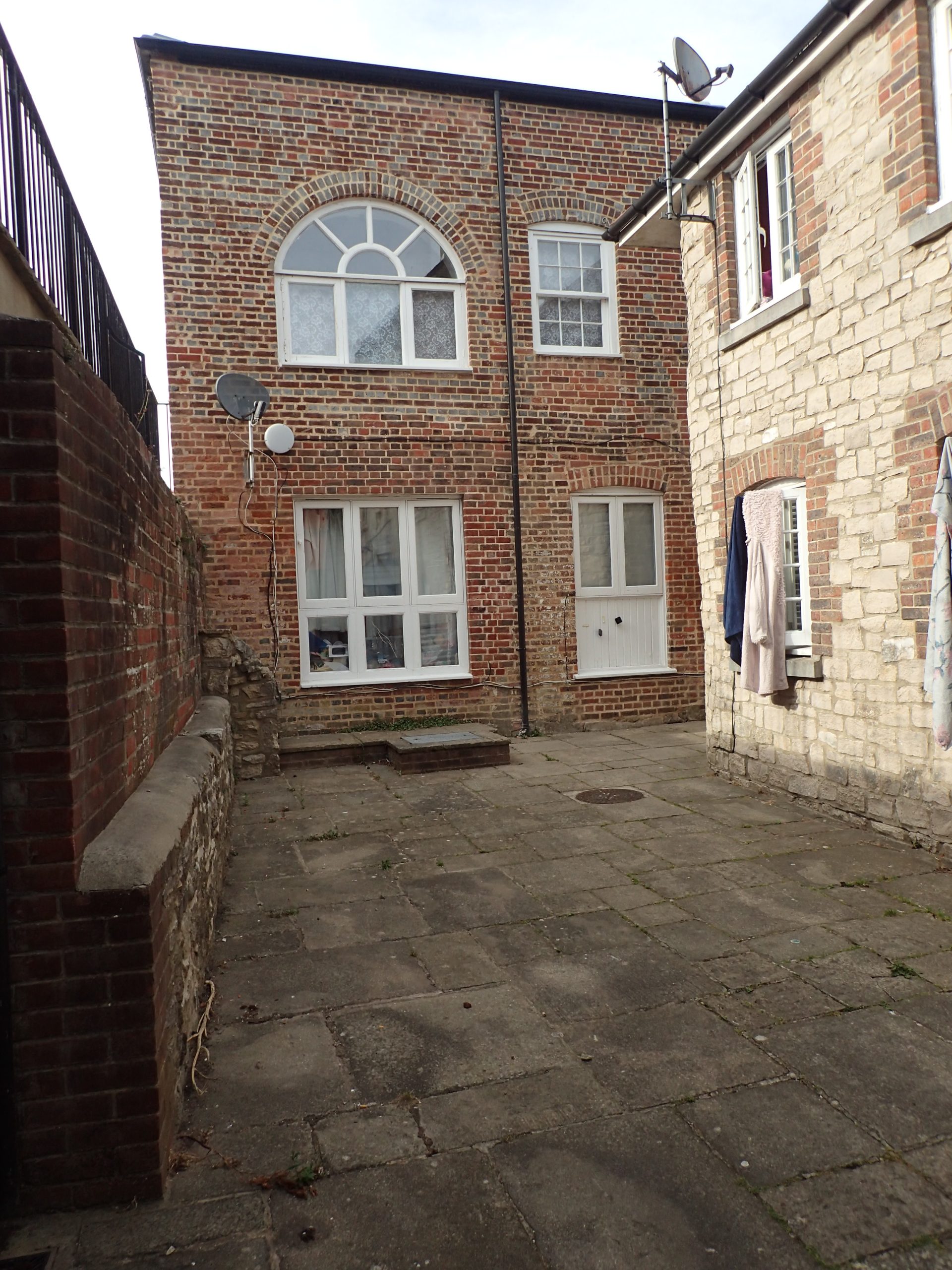
In the 20th century It became the headquarters of the British Legion in the town and in the late 1990s was converted into social housing.
The agricultural depression which followed the end of the Napoleonic Wars hit the West Country particularly hard. This reduced the demand for beer and by 1828 the number of breweries in the whole of the County of Dorset was reduced to a mere seventeen.
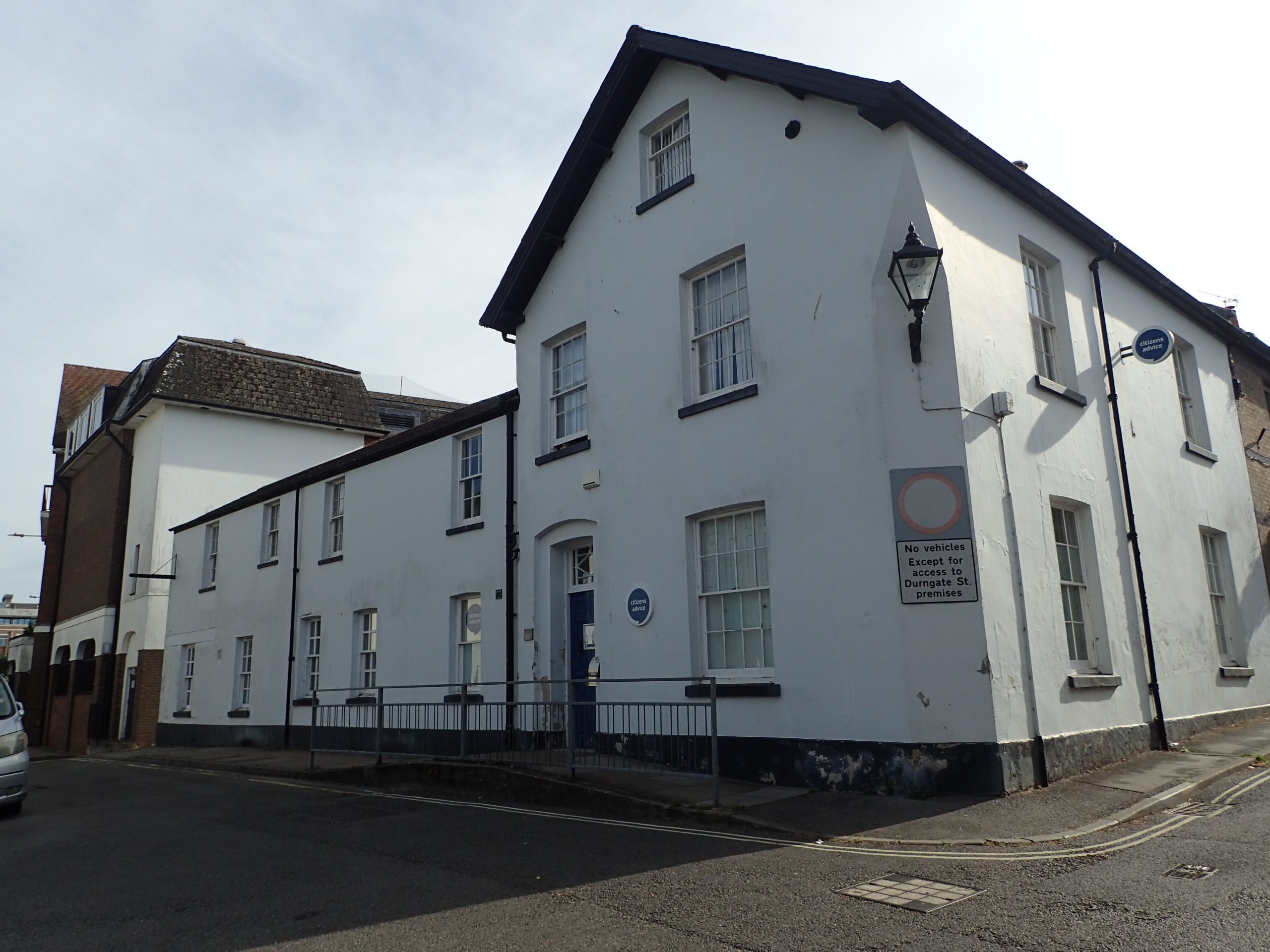
The Green Dragon tavern on the corner of Durngate Street and Acland Road, now the Citizens’ Advice Bureau (Photo 7) was initially leased by the parents of Sarah Eldridge from the Williams family. She married John Balsom in 1827 who became the landlord of the tavern, whilst she took charge of its brewhouse. After John Balsom’s death in 1829 she married Charles Eldridge who was the Wine Steward for the Williams family at their country house at Bridehead. After the marriage Charles Eldridge left Bridehead and ran the tavern for the next four years.
In 1833 the lease to the Antelope Hotel, also owned by the Williams family, came up for renewal. Since Charles Eldridge had remained on good terms with the family he was offered the lease. Under his management the hotel concentrated on stocking its cellars with fine wines and spirits which were once more available from France and the continent in general.
For reasons which remain obscure the lease to the Antelope was not renewed in 1835 and Charles Eldridge once more took charge of the Green Dragon. He also continued his trade in wines and spirits by opening a shop in nearby Charles Street where, in addition to imports from France, he stocked gin from Holland and whiskies from Scotland. In 1837 the Williams family acquired the land behind the tavern (now the Waitrose car park) and leased it to Charles who constructed a small brewery on it. Five years later Charles acquired the lease to “The Star” a public house close by. This lease included both a malthouse and capacious stabling suitable for the dray horses necessary to deliver the beer brewed by the new brewery.
In 1846 Sarah found herself a widow again on the death of Charles who was felled by apoplexy and is buried in All Saints church.
Undaunted she brought in a friend, John Hodges a wine merchant in Weymouth, to run the wine and spirit business and together they built up a small chain of ‘off-licences” in south Dorset.
She obtained a long lease of twenty-one years to the site of the Green Dragon and enlarged the brewery to increase its output to service a network of tied houses including three pubs in Fordington, and a number in Weymouth, in addition to an hotel in that town.
She then acquired a long lease to a site at the southern end of South Back Street (now Trinity Street) on which she built the Junction Hotel. The site was strategic since it was close not only to the newly opened market, but also the junction between the two newly opened railway lines and the two railway stations, and the hotel was an immediate success.
In 1850, after the death of her son Charles from lockjaw, she brought in a new partner, Alfred Mason, a London accountant specialised in brewing. Then in 1854 the new partnership purchased the Pale Ale Brewery.
By 1851 the number of breweries in the town had been reduced to eight of which the Phoenix owned by William Galpin, and the Green Dragon, now called simply the Dragon were the market leaders.
In November 1856 and at the age of only fifty-eight, Sarah died of a “spasm”, a common symptom of arsenic poisoning which might well have been caused by the lead pipes used in the Dragon Brewery.
Her son in law, the lawyer John Tizard, became Alfed Mason’s partner and under their joint management it acquired the Pale Ale Brewery and a number of malt houses in the town bringing the total owned and managed by them to seven. They also expanded the network of tied houses and in the 1860s they profited from the railway link to Southampton to purchase public houses in the latter’s port district.
By 1870 it owned a network of twenty-six tied houses and three hotels (the Exhibition and the Junction in Dorchester and the Queen’s Hotel in Weymouth) and in that year, Alfred Mason resolved to retire.
His share in the partnership with John Tizard was acquired by Alfred Pope one year later after the business had been thoroughly audited.
The history of the transformation of the Dragon Brewery into the Eldridge Pope Brewery on the Weymouth Avenue site together with its closure fairly recently, is for another time, and it seems appropriate to end this account of the origins of brewing in the town with the opening two verses of the Dorchester Beer Song, dated 1784:
“In these troubled times, when each mortal complains,
Some praise to the man is most certainly due.
Who, while he finds out a relief for their pains.
Supplies all his patients with good liquor too:
Then attend to my song, and I ‘ll make it appear,
A specifick for all is in Dorchester- beer.
Would our Ministry drink it, instead of French wine.
The blessed effects we should quickly perceive.
It would sharpen their senses, their spirits refine.
And make those – who now laugh at ‘their folly – to grieve.
No Frenchman would dare at our councils to sneer.
If the statesmen drunk nothing but Dorchester-beer.”
IAN GOSLING July 2026
PHOTOGRAPHS.
- Old Malthouse CS.
- Kings Arms brewhouse June 26.
- The Phoenix June 26.
- Spur stones June 26.
- Pale Ale arch and Three Mariners June 26.
- Pale Ale brewhouse June 26.
- Green Dragon June 26.
Recent Comments