
DORCHESTER’S GHOST SIGNS
By Ian Gosling, Dorchester Civic Society Chair 14.01.2025
Thoughts often turn to ghosts at this time of year. It is therefore very appropriate period to examine the ghost signs which still exist in Dorchester, and which have not yet departed our town for all time!
What are ghost signs?
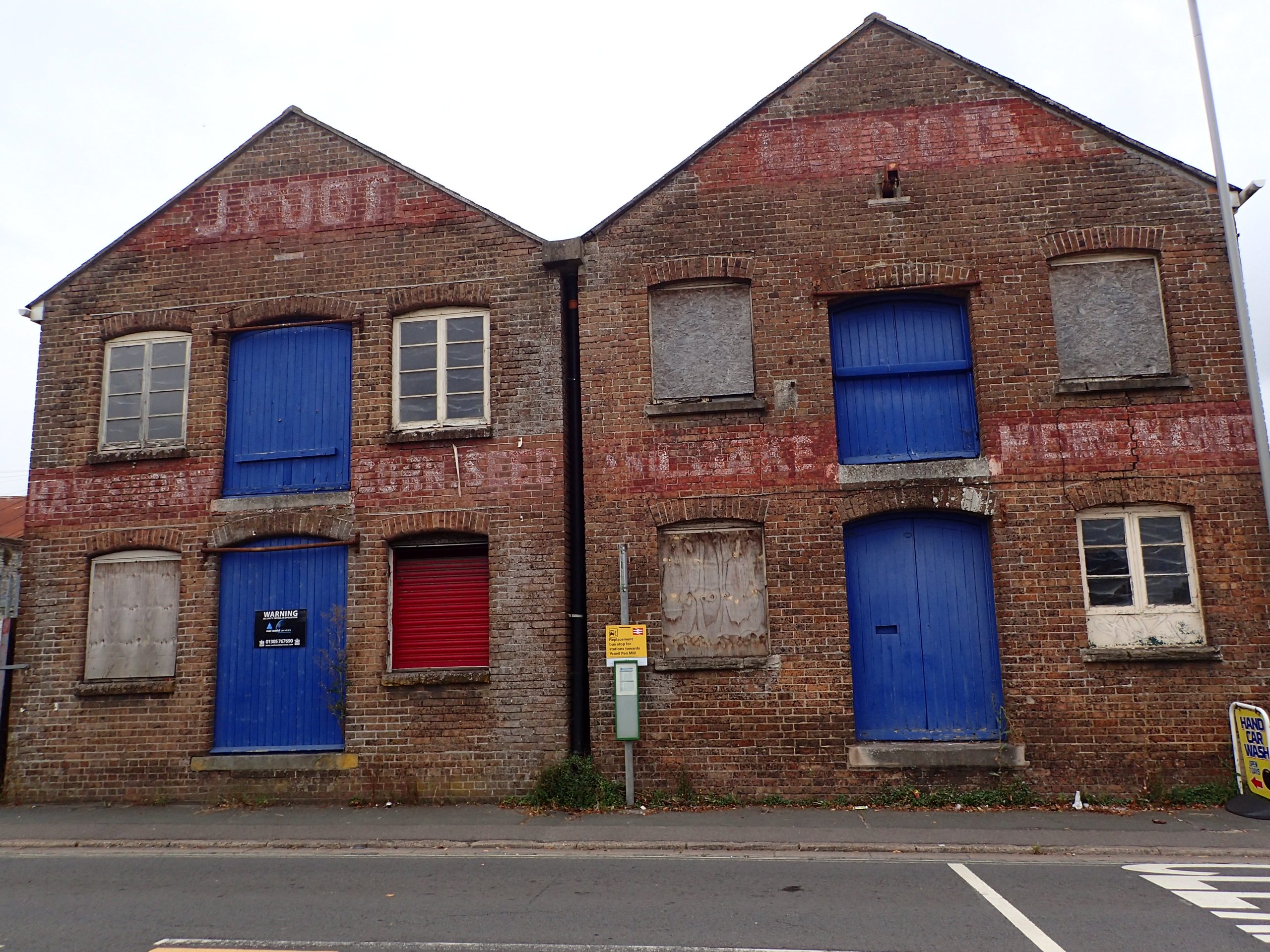
I first became aware of the term at the end of last year when the Civic Society Planning Group examined a planning application to transform a group of Victorian former warehouses on the northern edge of the market in Maumbury Road into residential accommodation. The two facades of the brick warehouse buildings facing the road are painted with the faded remains name and trade of the former occupier, the seed and grain merchant J. Foote. The Society recommended that a condition be imposed on the developer to restore the signs to their original state given the historical significance of the merchant to the agricultural history of the town.
During the course of the committee’s work, it discovered that Historic England had opened a register of ghost signs on its web site in 2023 (now closed to new entries) and that this included eleven entries for Dorchester and Fordington.
This post will examine each of these entries on the registry and some others that I have found.
Before doing so it is helpful to give a brief outline of the importance in urban history of shop and business signs.
From the medieval period to the 18th century the facades of town streets throughout Europe were decorated with a multitude of signs indicating the trade or profession exercised therein, and/or of the names of the occupiers. This was particularly important since although street names were often indicated by name or by an emblem, numbering was only introduced to streets in the 19th century when they became essential to ensure the correct delivery of letters using the new postal systems.
These signs took the form of the names of the occupiers and/ or emblems or sculptural representations of their activity. The profusion of such signs, often projecting low over highways devoid of pavements would have constituted a hazard for passing wagons, carriages and indeed tall riders on horseback. The only such signs which remain in everyday use in modern Britain are pub signs and barbers’ poles but an idea of the prominence of former hanging signs can be obtained by looking at the new sign outside Barclays Bank.
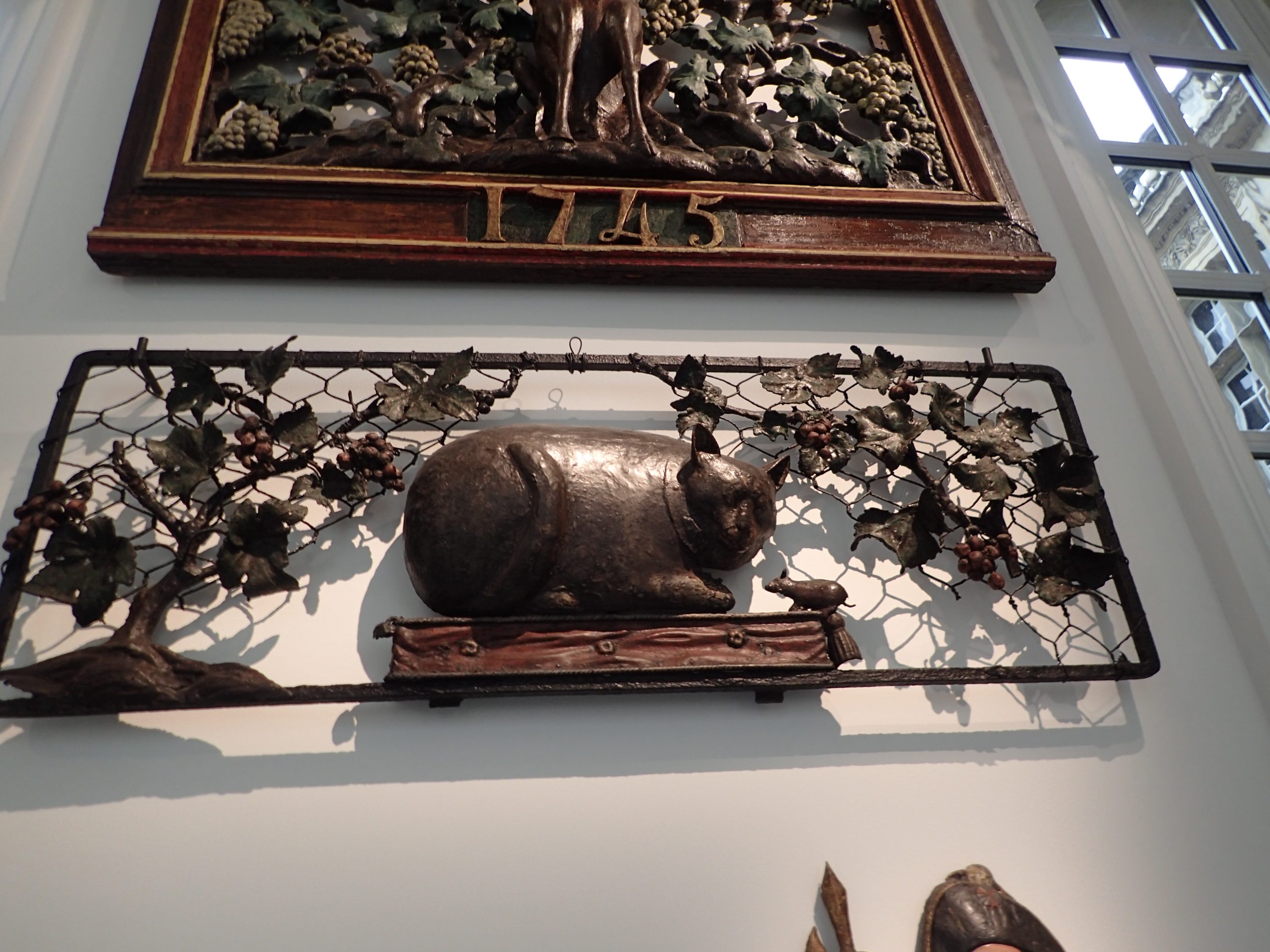
A good idea of the profusion and variety of such signs can be gained by visiting the collection in Paris’s Carnavalet Museum. By way of illustration, see three examples from their exhibition: the wrought iron sign of the cat and mouse emblem of a tavern (Photo 1),
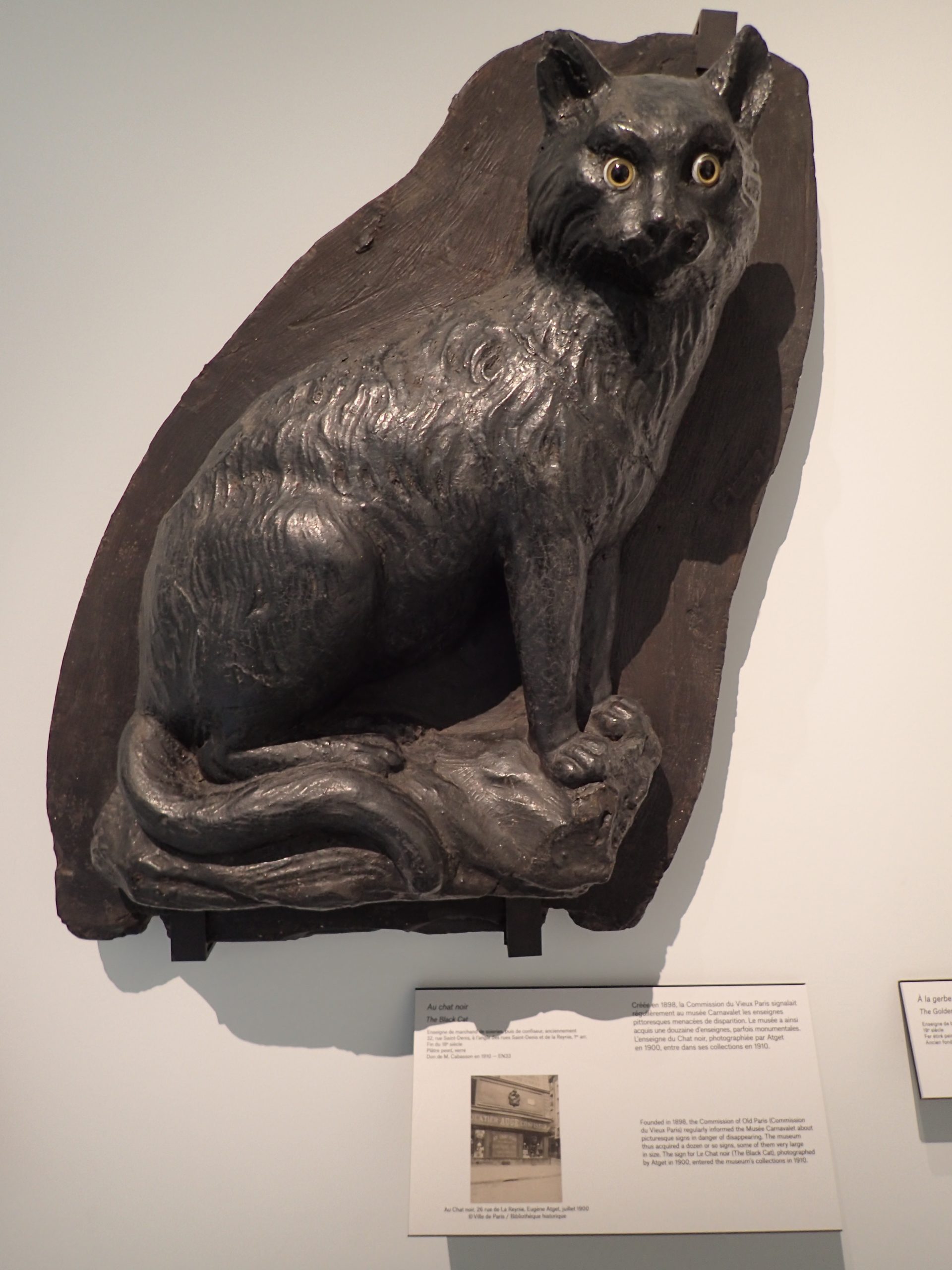
the lifelike sculpture of the black cat of a confectioner (Photo 2)
and the painted wooden panel of a restaurant bearing a black person’s head entitled “A la tete noire” (Photo 3).
I will start with painted signs, which can as they age fade away and become impossible to read. Legibility often depends on the light conditions, principally the position of the sun, when they are viewed.
There is no such problem with the first two on the register which are the painted names of the former “Lott and Walne” iron foundry on its eastern and western facades in Fordington (Photo 4 of the western façade). 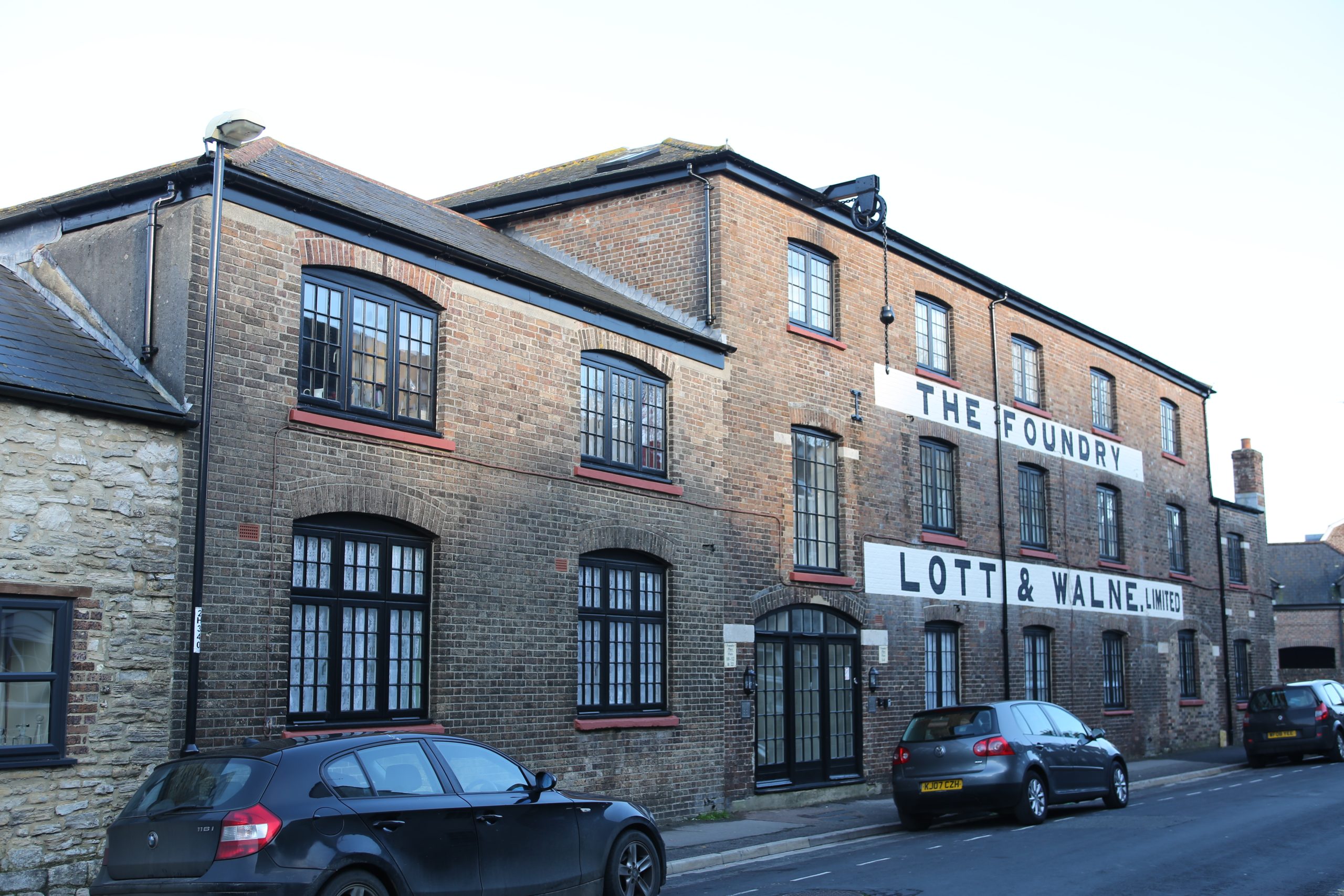 They were restored when the building was transformed into residential accommodation.
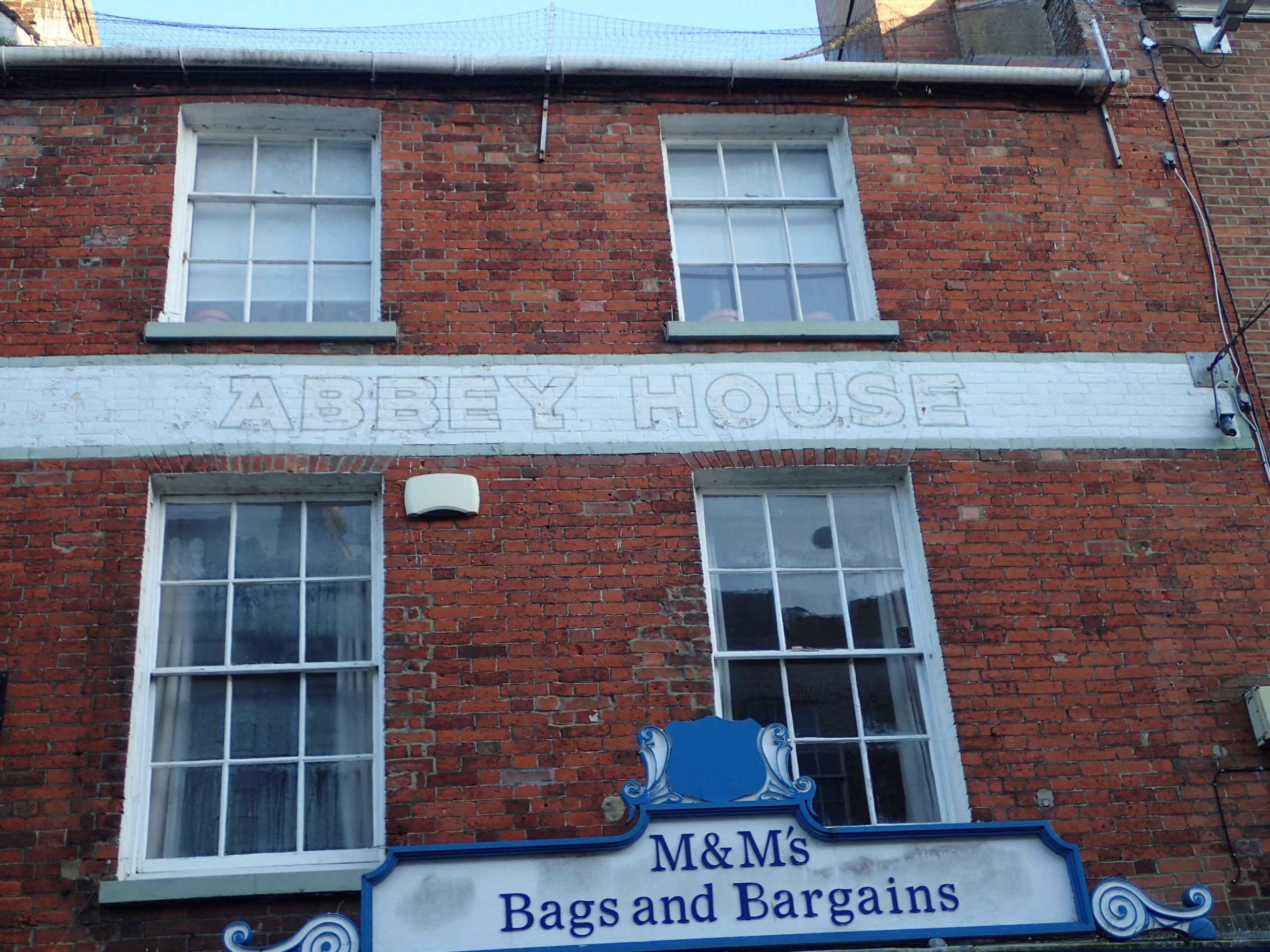
The next painted sign is that of “Abbey House” on the façade of No 3 Cornhill, over its original 18th c shop front, which incidentally is the best surviving example of such a wooden frontage in Dorchester (Photo 5).
Another prominent painted sign is that advertising the presence of the “Harris Nursery” on the west façade of the nurseryman’s house and office in Borough Gardens (Photo 6).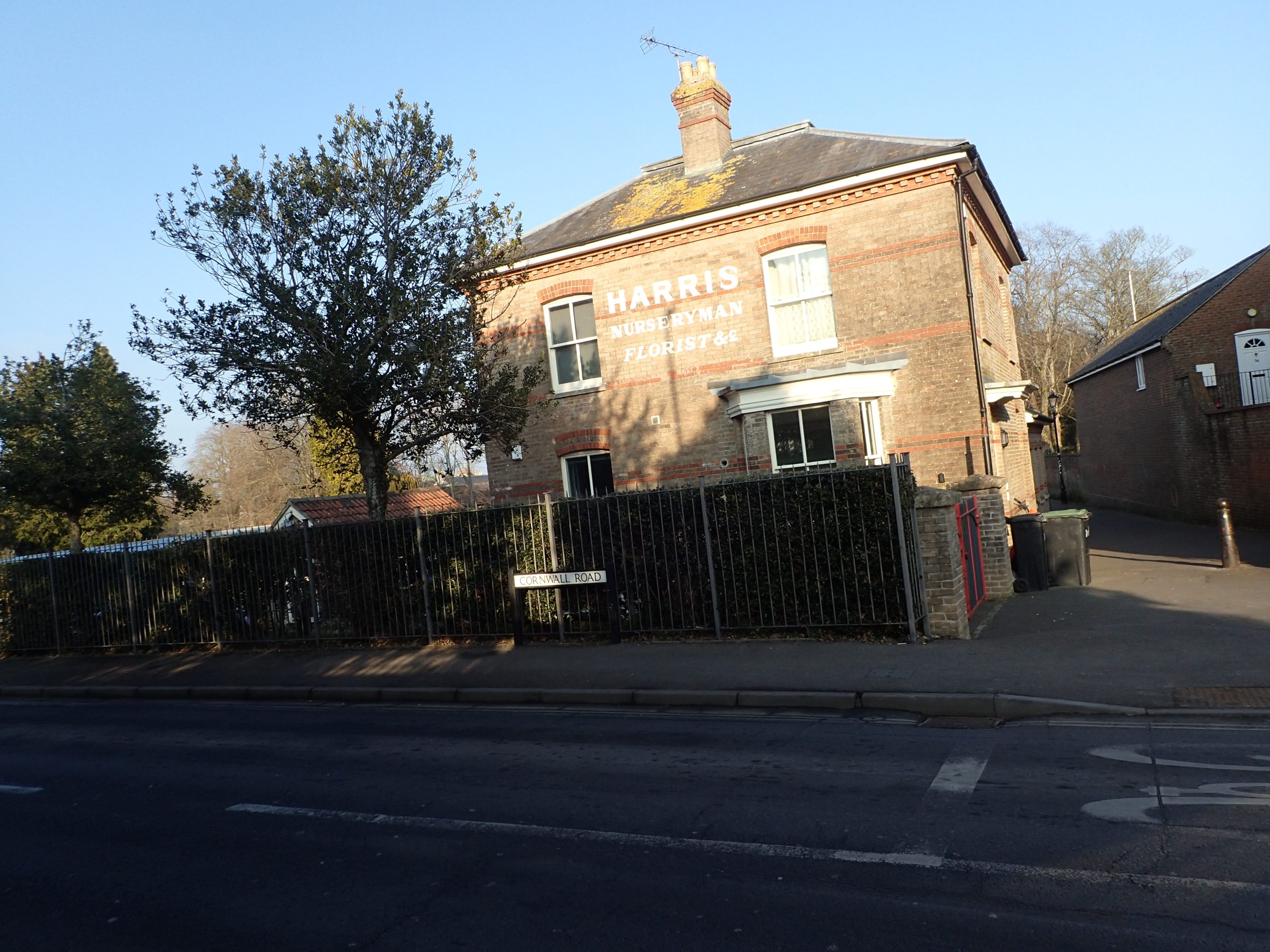
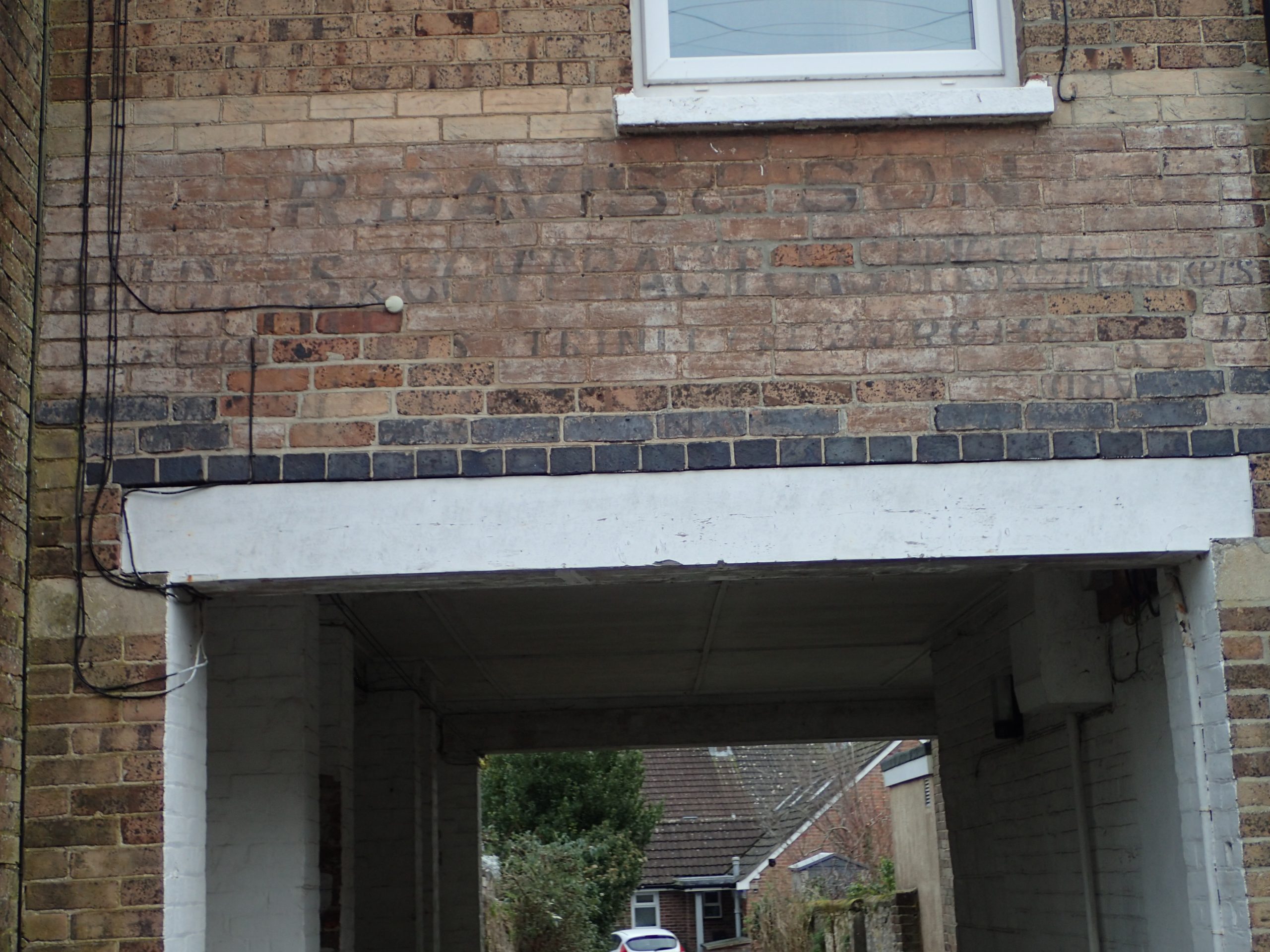
A painted sign which has faded with the years and is now difficult to read can be found at the end of a row of cottages dated 1886 in South Walks in Fordington , it is possible to discern the name “R. Davis and Son” but I have been unable to read the description of the trade which it exercised (Photo 7).
Another faded sign reads “Tap Room” on the eastern side of the precinct of the Kings Arms over a door giving onto Friary Lane (Photo 8).
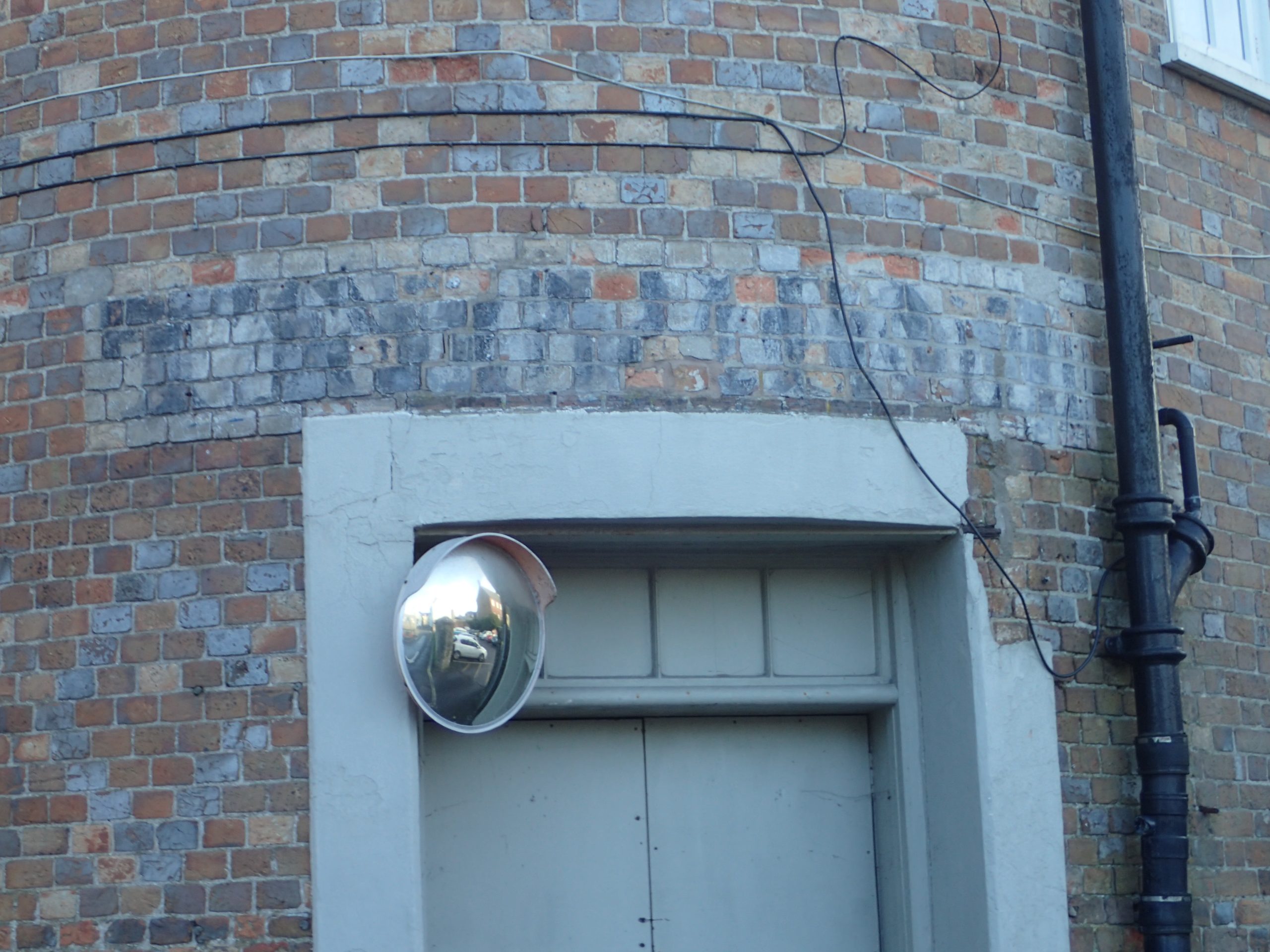
The tap room was the 18th c equivalent of the public bar, specifically aimed at the coachman and other servants of a wealthy travelling family.
Last are the two signs on the facades of the grain merchant mentioned at the start of this post (Photo 9)
OLYMPUS DIGITAL CAMERA
which it is very interesting to compare with a photo of it in activity in the Victorian era (Photo 10).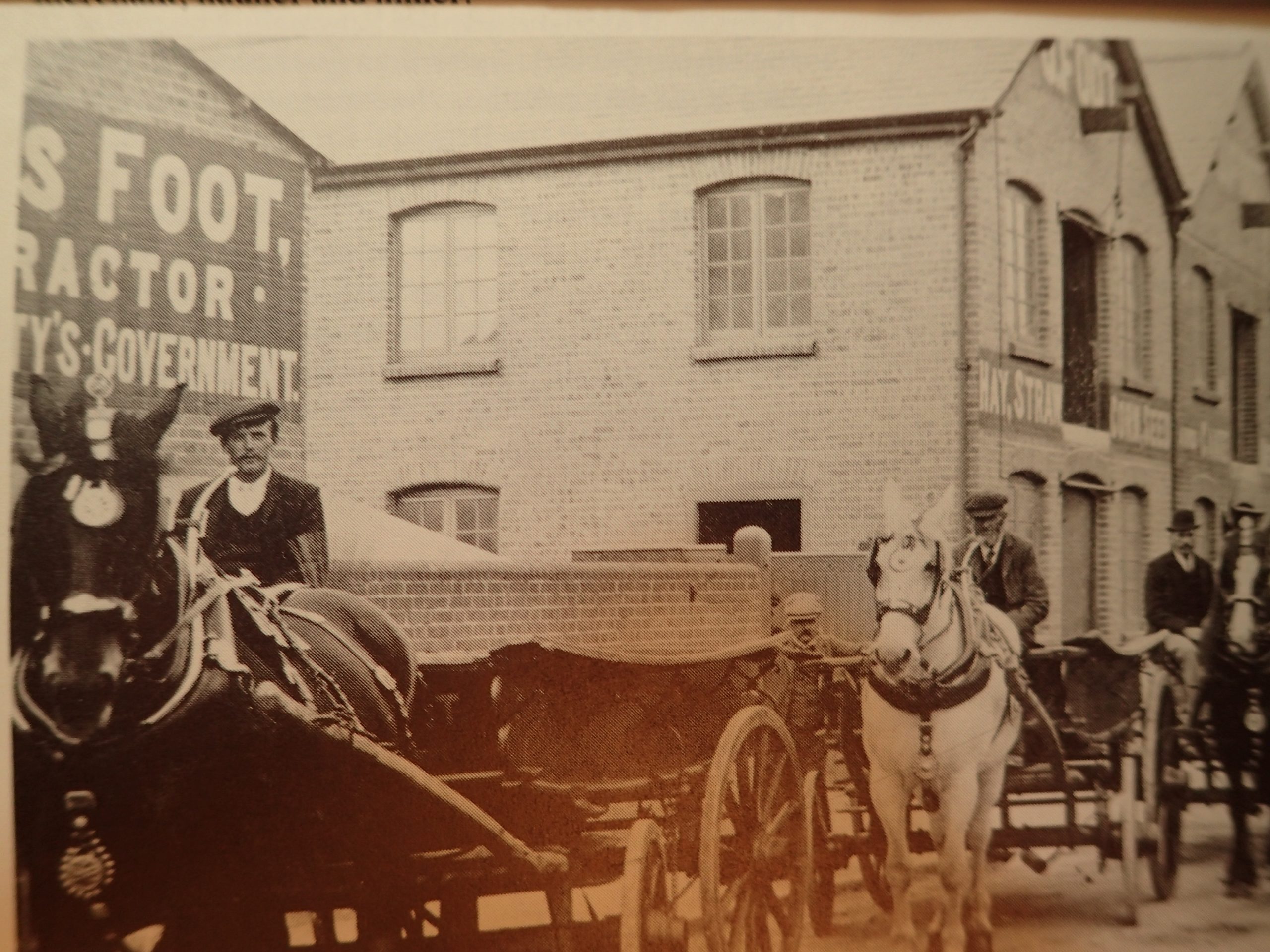
A number of signs and insignia were executed in brick or stone on the faced of buildings built of similar materials. Good examples adorn the former Eldridge Pope Brewery buildings such as the “Dorchester Brewery” signs and logos of the Eldridge Pope brand notably on the main façade of the brewhouse (Photo 11 –showing both “Dorchester Brewery” name and, on the top right, the brand logo in the middle of the year 1880).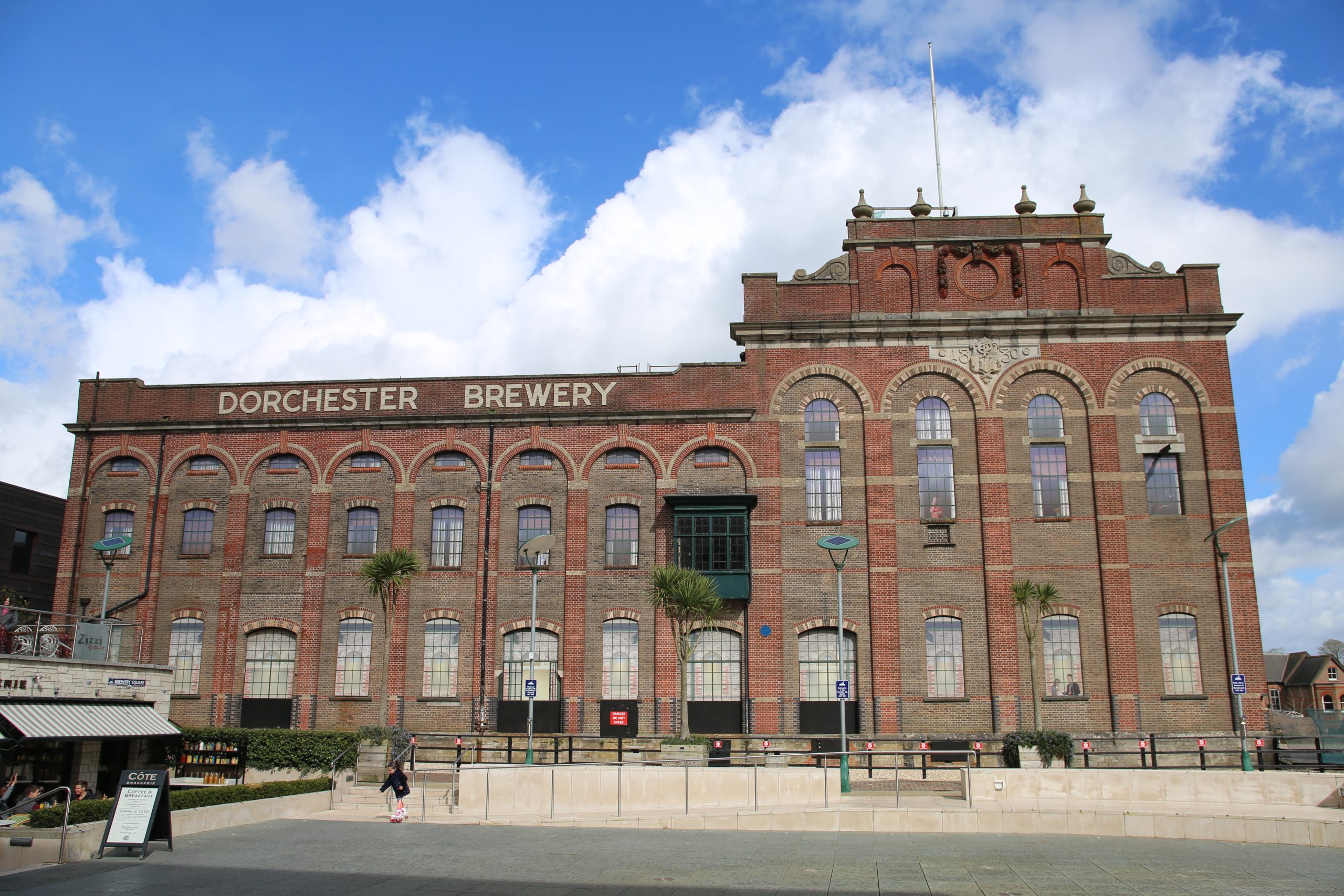
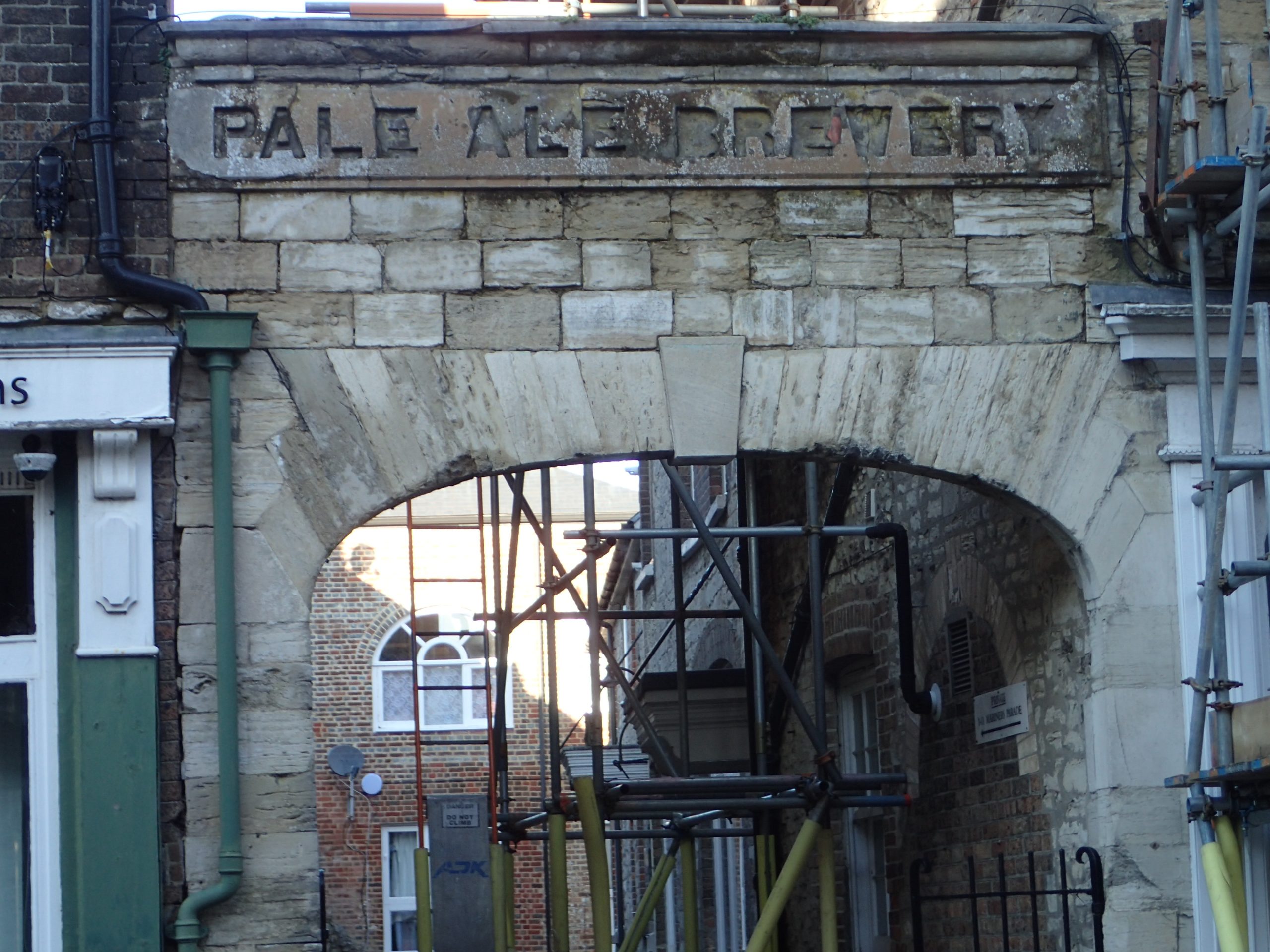
The sign of the “Pale Ale Brewery” a now vanished competitor, sculpted into the former stone entrance portal, survives in High East Street (Photo 12).
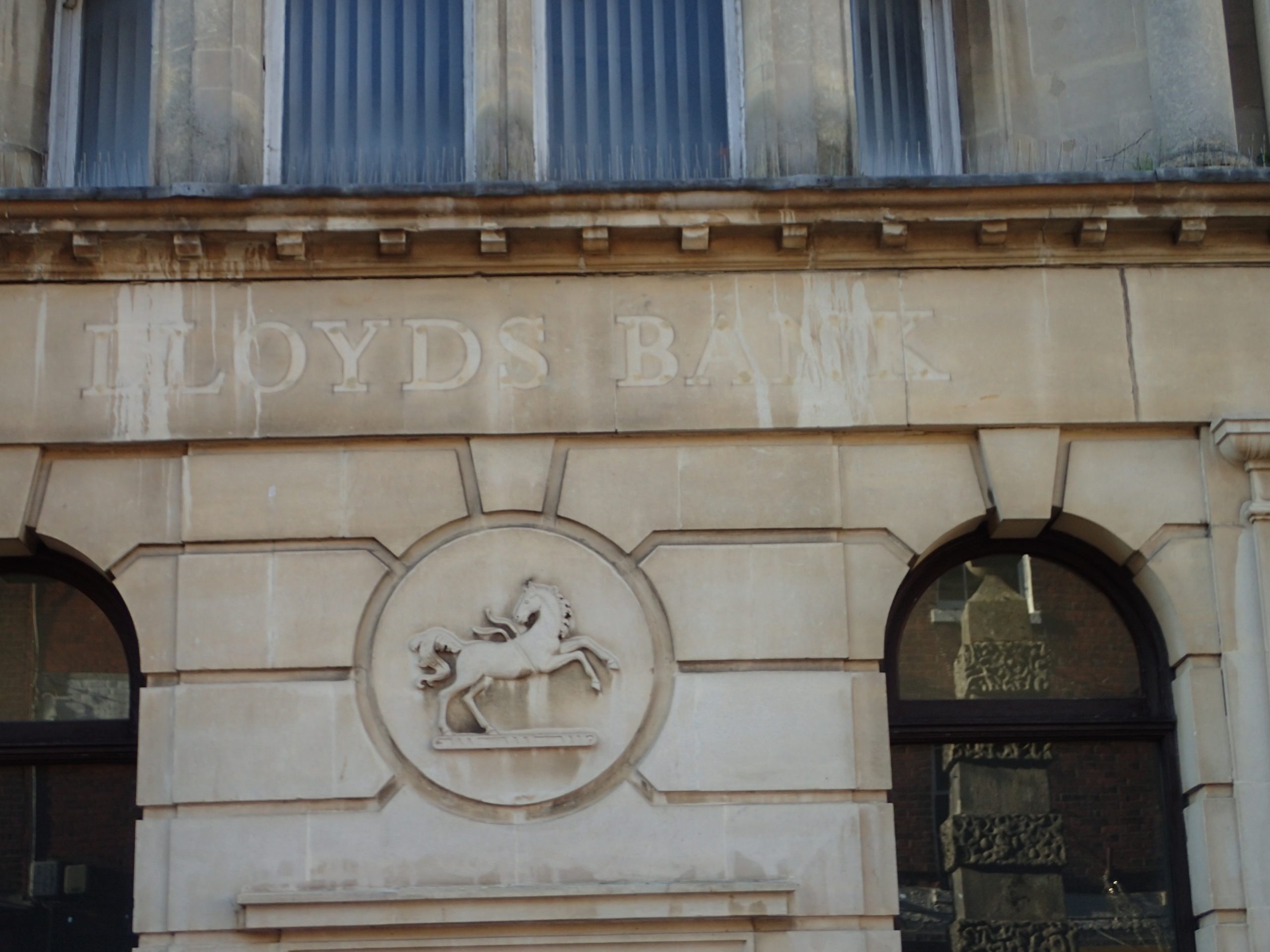
An example highlighted in now faded paint can be found on the wall facing Cornhill of the former Lloyds Bank (Photo 13).
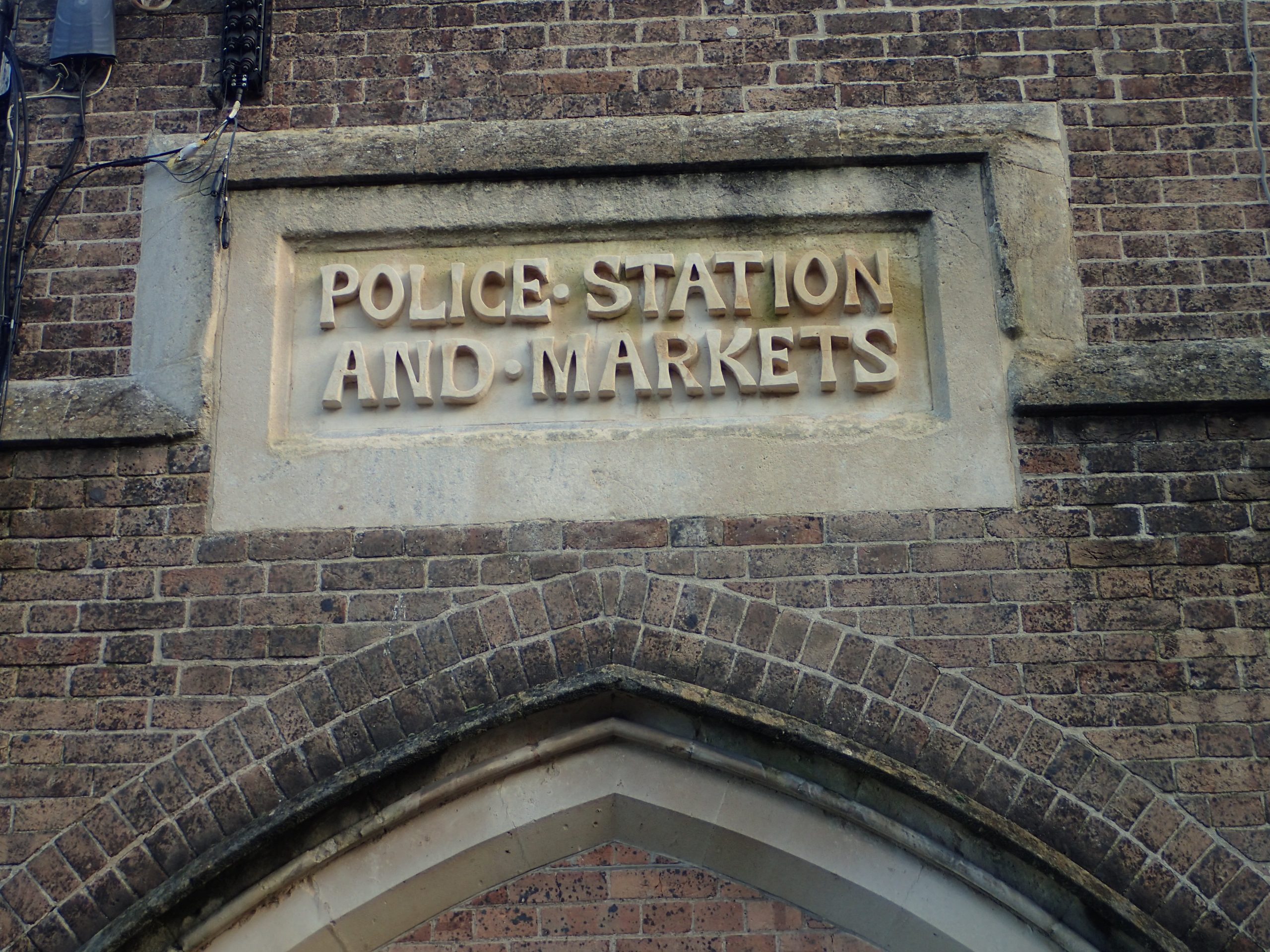
Lastly, the stone tabled inscribed “Police Sation and Markets” reminds the contemporary pedestrian of two very important functions exercised in the precincts of the Corn Exchange (Photo 14).
I will end by signalling sIx examples which are not on the Historic England register.
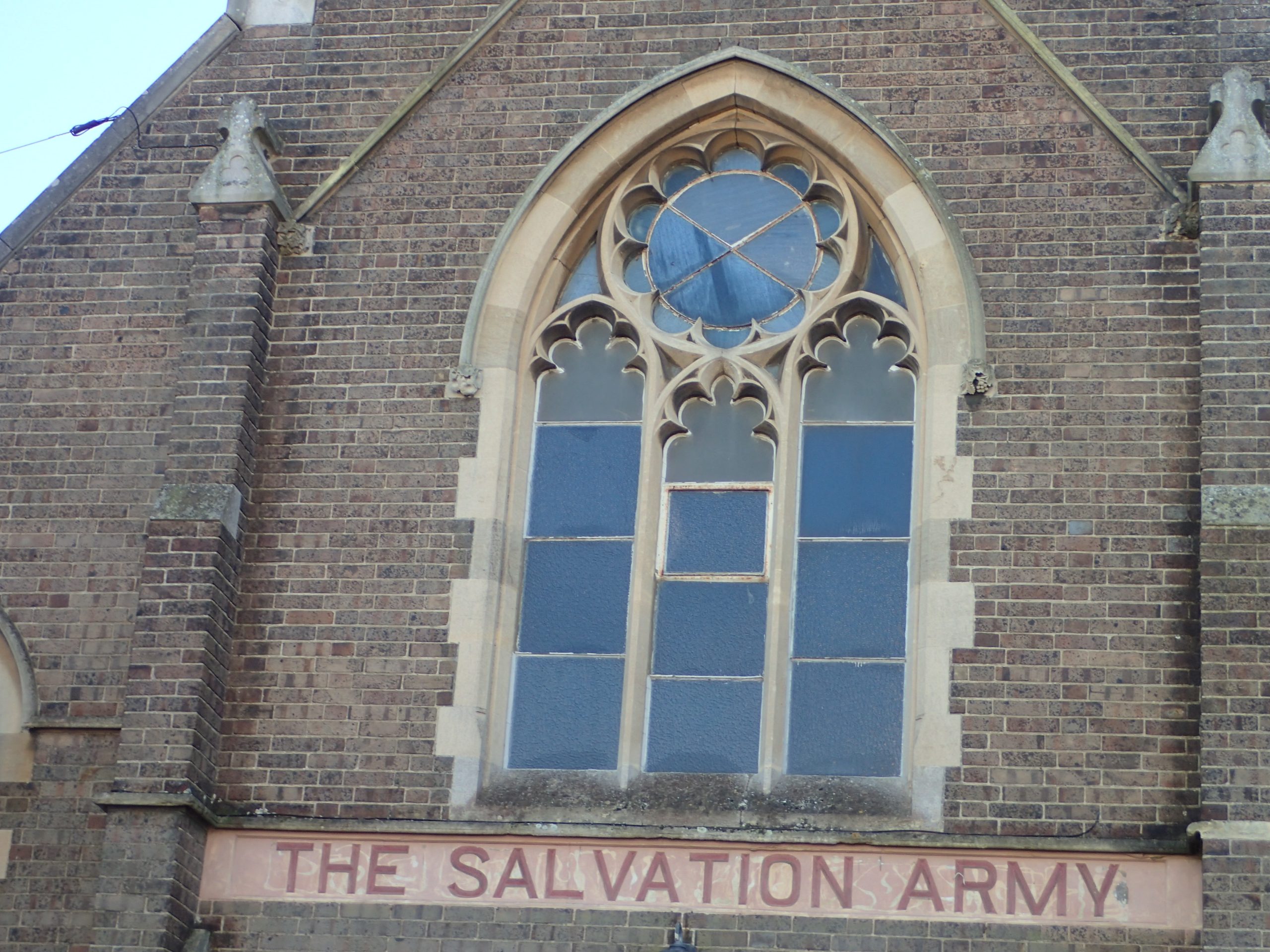
The former Salvation Army Citadel in Durngate Street, at present used as a dance studio, is adorned by a painted sign” The Salvation Army”, still in good condition over the main entrance door (Photo 15).
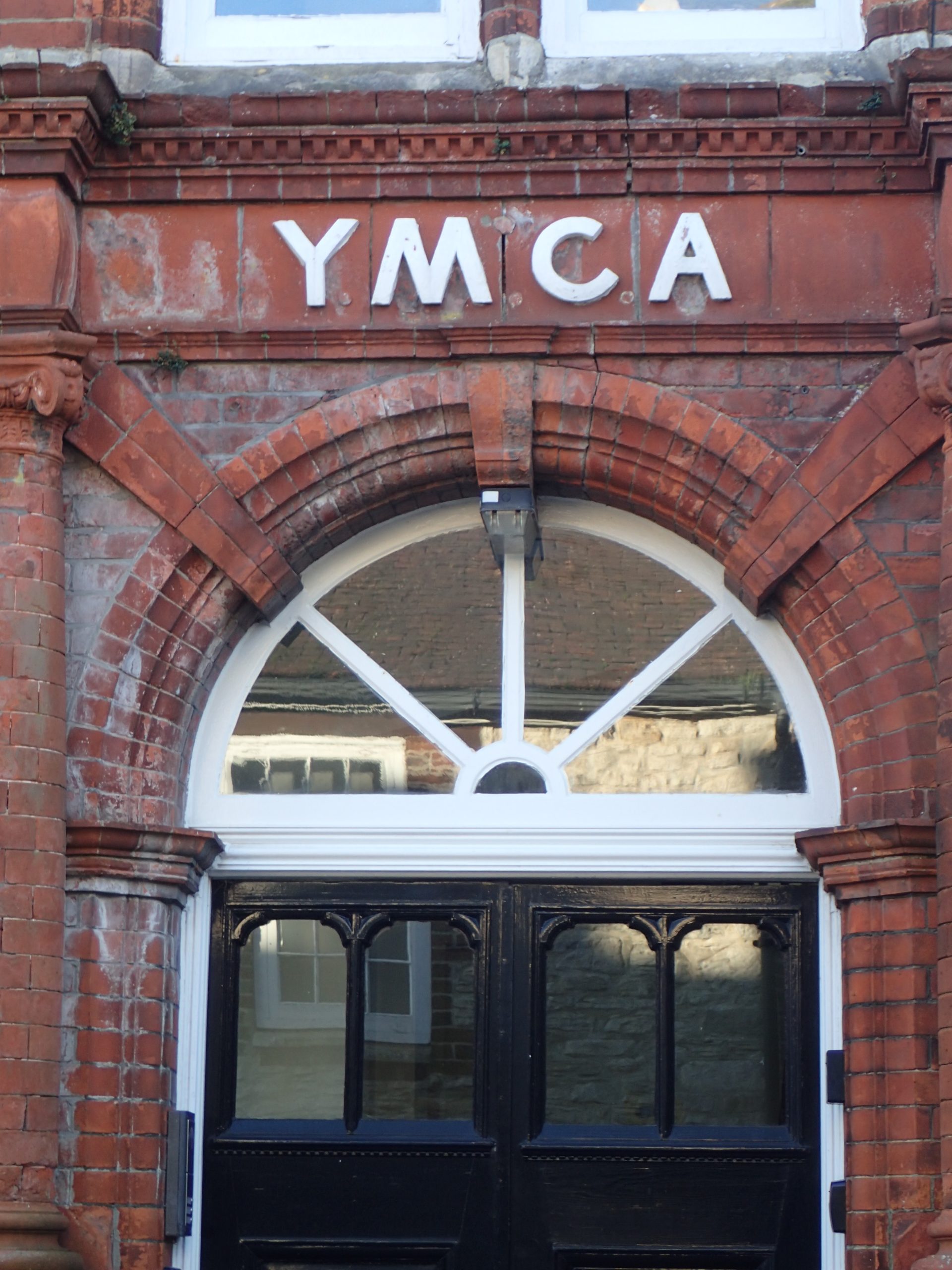
The former YMCA now residential accommodation, built in brick in 1868, in nearby Icen Way, is identified by its initials picked out in a contrasting white wooden letters over its entrance door (Photo 16).
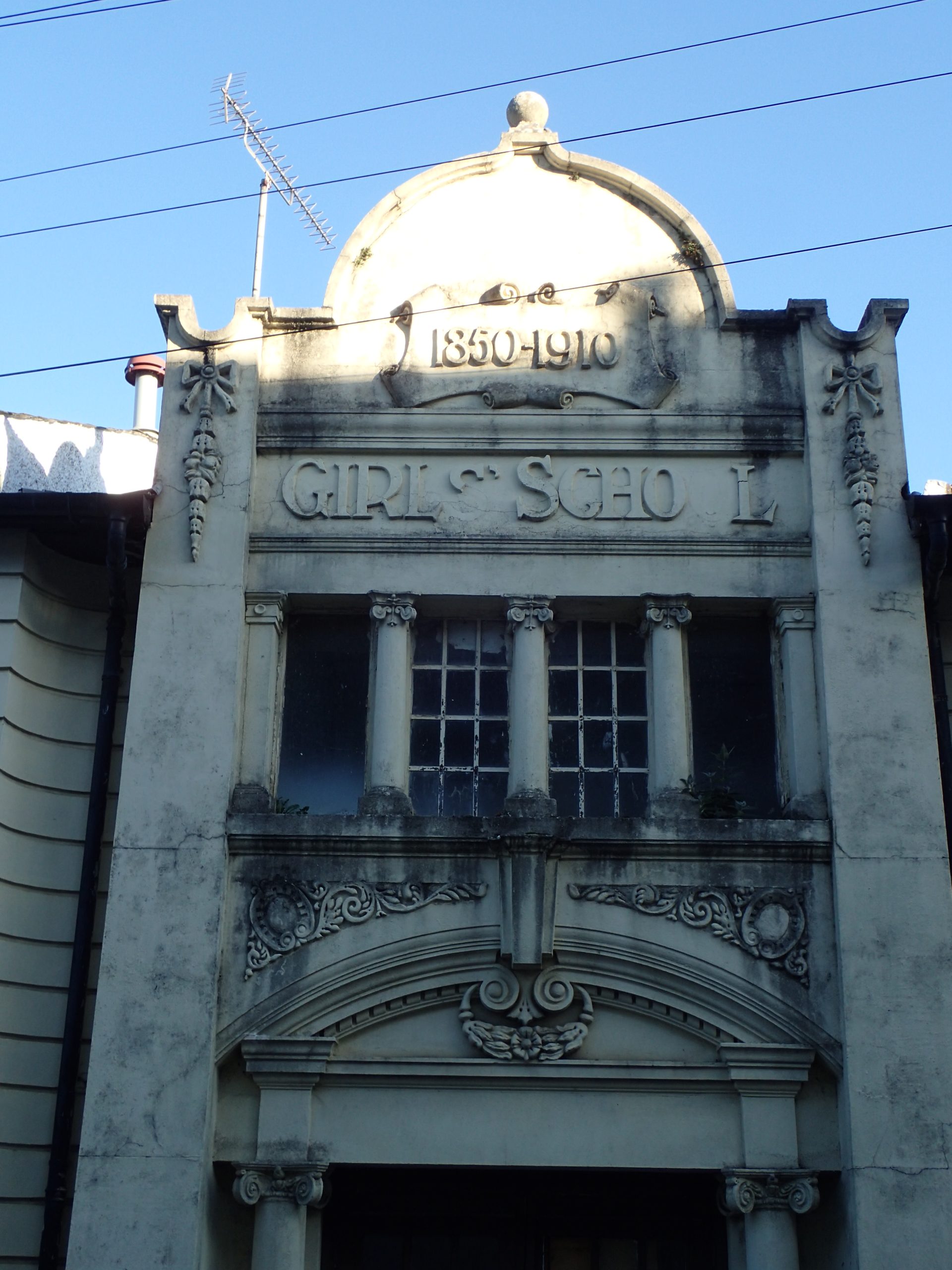
Higher up in Icen Way Arts and Crafts stucco façade of the former Girls’ School is adorned at the top of the first floor with a large tablet inscribed” Girls School” above which is a tablet bearing the dates 1850-1910 (Photo 17).
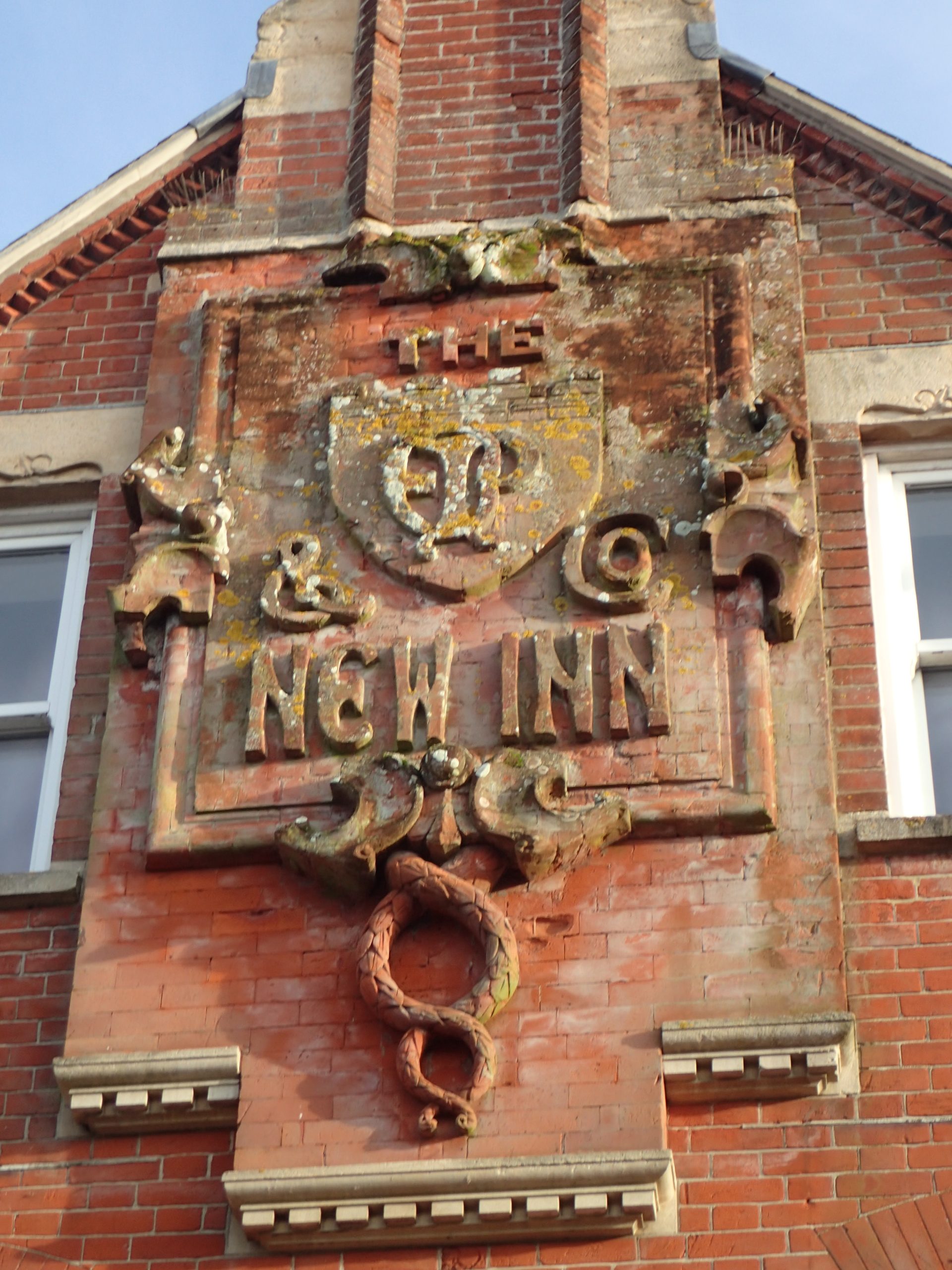
The façade of the former “New Inn” in South Street, now a shop also built in brick at a similar date, is adorned by a brick medallion bearing its name and the Eldridge Pope logo (Photo 18).
The brewery logo also appears on the stucco façade of the former public house in the Grove, now a fitness centre (Photo19).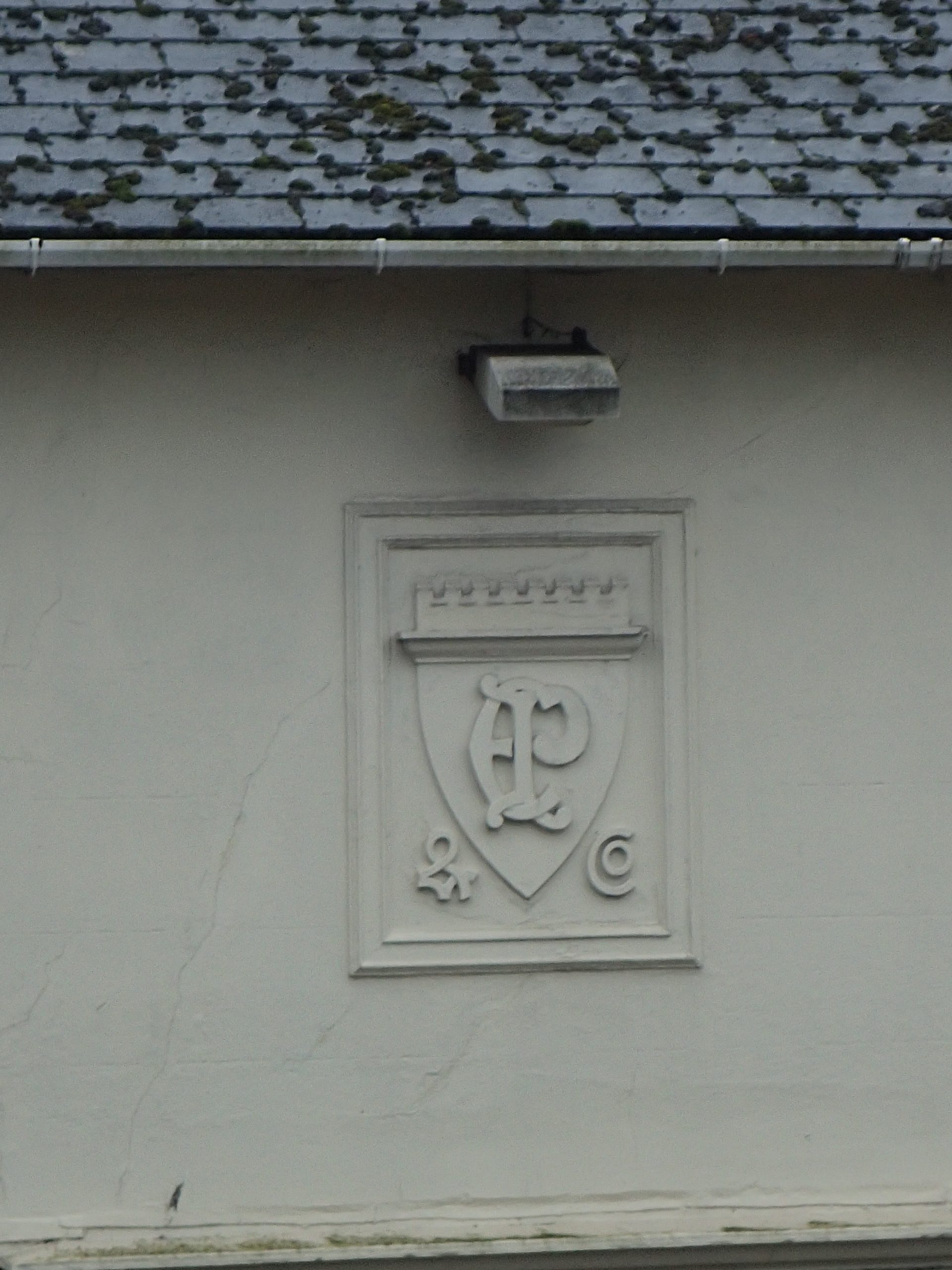
Last of all is the large painted sign (Photo 20) painted in the 1950s on the gable of the shop on the corner of South Street and New Street which directs shoppers the direction to the “Forum Centre Supermarket and Shopping Mall” and the “Nappers Court Coffee Tavern shops and offices”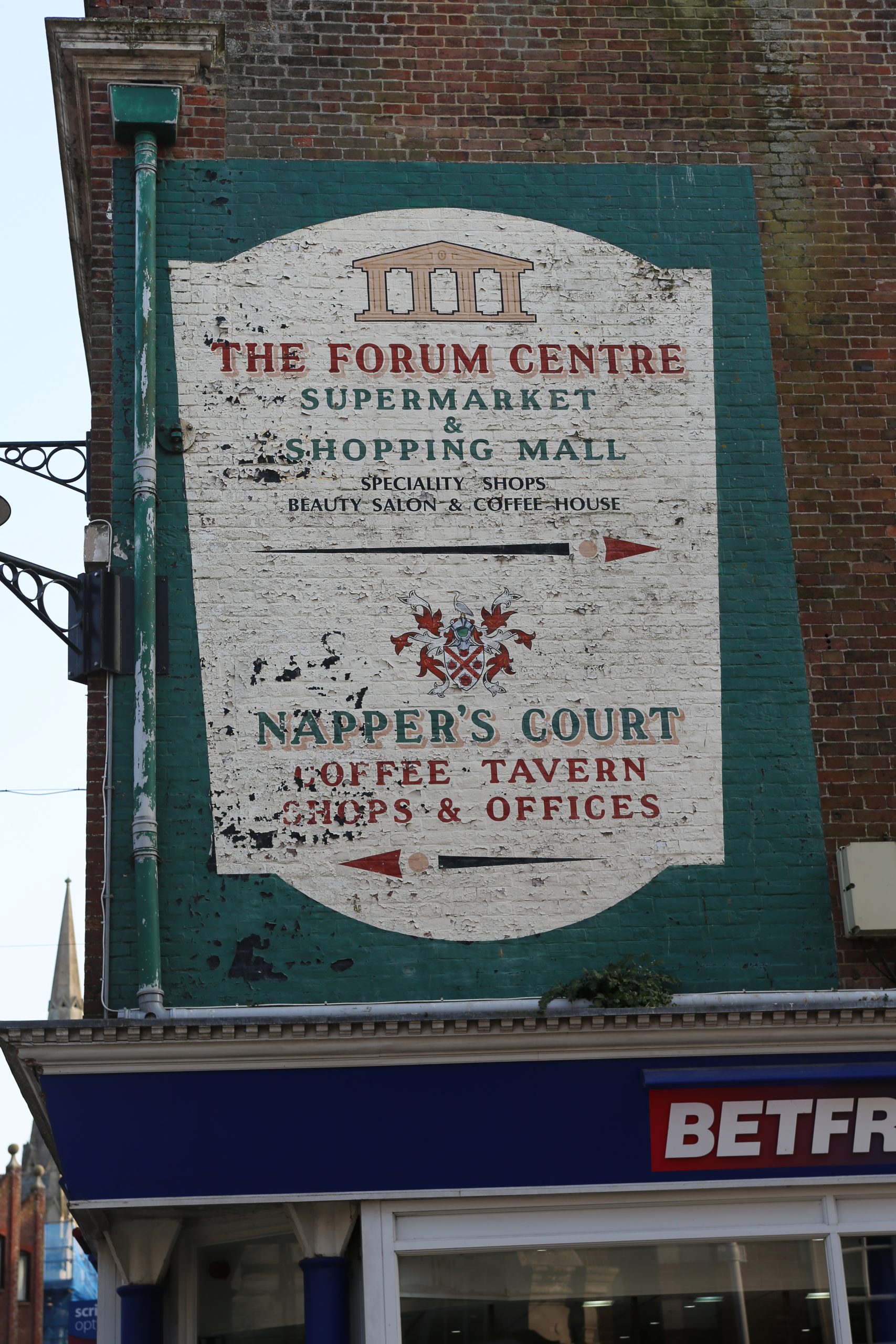
Could this one day qualify to join the list of Dorchester’s ghost signs?
PHOTOS GHOST SIGNS.
- CARNAVALET CAT AND MOUSE Mch 22 olymp.
- CARNAVALET BLACK CAT ditto.
- CARNAVALET BLACK HEAD ditto.
- LOT AND WALNE CS 56.
5.ABBEY HOUSE DEC 25.
- NURSEY FEB 23 76.
- DAVIS DEC 25.
- TAP ROOM DEC 25.
- FOOTE NOW AUG 24 73.
- FOOTE PAST JAN 26.
- POPE MAY 19 CAN 134.
- PALE ALE DEC 25.
13.LLOYDS DEC 25.
- POLICE DEC 25.
- SALVATION DEC 25.
- YMCA DEC 25.
- GIRLS SCHOOL DEC 25.
- NEW INN DEC 25.
- GROVE JAN 26.
- NEW STREET MAY 19 CAN 127.
Recent Comments